Thursday, August 4, 2016

Slandering Sanders

I was a kid during the 1979 Iranian Hostage Crisis. I have some pretty vivid memories of it.

Most are images of the Ayatollah Khomeini, looking somewhat like Christopher Lee's portrayal of Saruman in the Lord of the Rings films. But I also remember another ayatollah that most probably don't. This Shiite cleric, speaking in exile, condemned the hostage-taking as being against Islam. I do not recall his name, but I remember him looking like a turbaned version of Allen Ginsberg. He was rotund with thick glasses and a jet black beard. I picked up that he and Khomeini were not friends.

My memory is pretty visual, but in this instance the condemnation of the act struck my imagination most. America was rife with Islamophobia at that moment and this picture of internal conflict was a hiccup in the otherwise steady pulse of prejudice in the popular culture. Was this other ayatollah ... a "good guy"? I was confused. I was just a kid and I did not know what to think.

I remember this moment whenever Fox News rhetorically wonders why most Muslims "don't condemn terrorism," which of course they do. In fact, I've been sensitive to these awkward moments of uncertainly ever since. In his famous essay, "Notes on Nationalism," George Orwell wrote "The nationalist not only does not disapprove of atrocities committed by his own side, but he has a remarkable capacity for not even hearing about them." My childhood memory made realize that it applied to good things as well as bad.

I recently realized that this applies to petty party primaries as well. A little over a week ago, a friend of mine claimed that Bernie Sanders had done nothing to call out the misogyny of Bernie Bros. Sanders actually had done so on two major networks. When asked about it on CNN, he bluntly responded:
I have heard about it. It’s disgusting, Look, we don’t want that crap. We will do everything we can and I think we have tried. Look, anybody who is supporting me that is doing the sexist things is - we don’t want them. I don’t want them. That is not what this campaign is about.
After another interview on MSNBC, the interviewer acknowledged that Sanders had condemned sexist rhetoric by his supporters several times before. Unfortunately, a lot of bloggers do not watch interviews.

Every political organization has its incongruous subgroups, whether they are formal or informal. Do Log Cabin Republicans accurately represent the GOP or the LBGT community? Of course not. And every activist group gets unwanted problem members. It's hard enough to police small groups in person, let alone millions online.(1) Alas, our efforts to dispel the myth have been to small avail. The two Democratic primary camps had become almost as partisan and insular as the GOP's "elephant echo chamber." Almost.

Slandering Sanders had been something of a cottage industry this primary season. My previous posts looked at allegations of sexism that were arguable - or poorly phrased but ultimately true. They contained valid arguments and raised issues that should not be ignored. This post looks at those that don't.

Take Charlotte Clymer's cornucopia of bogus claims. It is easy to believe this is the work of some pro-Trump troll trying to stoke acrimony among Democrats. After all, the political landscape is now populated with wee little Lee Atwaters and Karl Roves, so some James O'Keefe-like stunts are to be expected. Clymer's prose reads like a conservative's parody of political correctness. Painful earnestness is difficult to fake on video, but text is a different animal. Still, my friends shared this rhetorical train wreck and it is pretty representative of the genre. Consider these paragraphs your one-stop-shop for such thought:
That insecurity  -  invariably referred to as masculine fragility or white fragility -  has been on ugly display since Bernie Sanders announced his presidential campaign last year. What was meant to be a challenge to the status quo has long devolved into harassing behavior by white male progressives (called “Bernie Bros”) that is sexist, racist, and disgusting.
The candidate himself, once a voice of reason and much-needed passion (if, perhaps, unrealistic), has become a parody of the supporters his campaign has struggled to keep in line throughout the primary season. The finger-wagging, the speaking over women, the assertion that Hillary Clinton isn’t qualified, the bizarre declaration that struggling pro-choice groups are part of “The Establishment”, all of it is symptomatic of a man who clearly respects women less than their male counterparts.
Okay, for openers, what racism specifically? Has Bernie Sanders been whitesplaining the infamous 1994 Crime Bill to Black Lives Matters protesters as Bill Clinton has? It was reminiscent of his finger wagging at Sister Souljah in 1992. Hillary Clinton has been pretty testy and condescending with them as well. Interestingly, the protesters that the Clintons are patronizing seem to be young women as well as black. But Hillary Clinton had never performed particularly well with young women - not even in 2008.

Incidentally, according to a recent Reuters/Ipsos opinion poll, it turns out that Hillary supporters are only slightly less racist than Trump ones. I suppose that 2008 PUMA thing was not an isolated moment. This is pretty predictable considering that much of Clinton's support comes from older voters. Of course, most of her support is not racist, but a worrisome - if unrepresentative - chunk is. That sort of puts the whole "Bernie Bro" narrative into perspective, doesn't it? Imagine a year of similarly dishonest think pieces on "Clinton Bigots." What impact might that have had on the primary? And if you were wondering how Bernie Sanders supporters answered, they were the least racist voters in the American electorate. Indeed, the Reuters/Ipsos poll confirmed a previous poll by Vox. It sort of makes you wonder if there were any polls taken on sexist attitudes. Well there was one that I know of, but I'll get to that later.

The point is, if you are going to allege racism, you should probably supply evidence. The evidence of sexism is ridiculously twisted, but at least it is presented. So, let's get to that now.

We can start with the aforementioned finger-pointing and speaking over others. People point when they are making a point. Indeed, it may very well be where the idiom comes from. Off hand, the only politician I can think of who never pointed was Franklin Delano Roosevelt and that was because he was using both his hands to hold himself up at the podium because polio had paralyzed his legs. But both Bernie Sanders and Hillary Clinton pointed and spoke over each other in the Flint, Michigan debates. Check the video.

Don't get me wrong: Obviously, there are contexts in which pointing and talking over others would be sexist (see my first footnote) or racist (see above). But often it is difficult to tell for sure. For example, we do not know the context behind that famous photo of Arizona Governor Jan Brewer getting pointy with President Barack Obama. Given his non-confrontational style, I am guessing it was unprovoked disrespect served up to pander to her Tea-bagger base. However, I cannot say for absolute certain because there is no audio of their conversation on the tarmac. But a televised debate is a different animal entirely and what we saw in Flint was clearly a heated, equal exchange with both parties pointing and talking over each other.

As for claiming Hillary Clinton isn’t qualified to be president, Charlotte Clymer ignores the fact that Bernie Sanders reasonably believed he was returning her serve - specifically a Washington Post headline that read "Clinton questions whether Sanders is qualified to be president." Clymer is very likely lying by omission because Sanders explicitly and repeatedly referenced this in his reply. In the link's video, Sanders quotes the headline in question, voices his disappointment in how ugly the campaign had turned, and finally summarized, "If I'm going to be attacked for being 'unqualified,' I will respond in kind.'" Really, it is impossible to miss. Clymer's only possible excuse is that she got her dishonest distillation second hand.

Speaking of ignoring, let's move on to Bernie Sanders's Planned Parenthood comments. Sanders promptly walked them back as poorly-worded, yet Clymer failed to mention that four months after-the-fact. To quote the absent-minded professor in Real Genius, "Always ... NEVER forget to check your references."

Moreover, the situation was a little bit complicated and Bernie Sanders had a partial point. Previously, some top-down organizations had endorsed Hillary Clinton over the wishes of their rank and file. The frustration must have stung. For example, the leadership of the nation's largest teacher's union, the National Education Association, had controversially made an early endorsement without first getting membership consensus. Otherwise, many believe, they would have likely done as the nation's largest nurse's union, National Nurses United, and strongly endorsed Sanders.(2) For many teachers, this bitterly reemphasized their need for a more democratic union. Things like this clarify what Bernie Sanders likely meant by "the Establishment" in the Rachel Maddow interview. Incidentally, watch the video in the link. It is obvious that he is in total solidarity with both the missions and the memberships of these organizations.

And there were additional considerations. Before Sanders walked back his comments, the feminist website Jezebel posted their immediate response. It was critical, but even-handed, providing context:
We can acknowledge here what Sanders probably meant: Both Planned Parenthood Action Fund and Human Rights Campaign have super PACs, which exercise political influence through campaign donations. Sanders isn’t a fan of that system. Both give virtual drops in the bucket each election cycle compared to, say, any oil and gas company ever, but yeah, those are super PACs. There are more substantive critiques to be made too, like Human Rights Campaign’s decision 2012 to honor Goldman Sachs for “workplace equality” while quietly ignoring the vast societal wreckage the company wrought at home and around the world. 
Fun Fact: Many in the LGBT community see the Human Rights Campaign as fairly, well, establishment. Indeed, the group is so cozy with Republicans that they actually endorse GOP candidates even when the Democratic candidate has a better record on LBGT issues. [EDIT: I thought one of these articles mentioned The Human Right's Campaign's infamous endorsement of incumbent Republican Al D'Amato over Democratic challenger Chuck Schumer in 1998. They don't, so here's the WaPo story on it.] And the Campaign has been alienating other LBGT rights activists for years. In fact, in her comic strip "Dykes to Watch Out For," Alison Bechdel had often mocked the organization as "The Champagne Fund."

I do not want to misrepresent the Jezebel article. It was definitely critical of Sanders and I encourage everyone to read it. It's a good example of a reasonable critique. I would certainly encourage Clymer to read it because I get the definite impression that she does not finish reading the articles she starts.

Of course, hatchet jobs from sloppy bloggers are par for the course. But it is a little more distressing when the "Gray Lady" gets into the game. The New York Times published an opinion piece claiming a study proved that Sanders supporters were more conservative than Clinton ones on issues of sex and race. Well, not quite. You see, as the Washington Post's Monkey Cage blog explained, the study was structured to allow Republicans to weigh-in on Democratic candidates. It turns out that, when you weed out all the Hillary-hating Republicans, the study actually tells a very different story. For example, Sanders supporters are more likely to demand that insurance cover birth control. As the socialist journal Jacobin outlined:
And for all the online chatter about sexist “Bernie Bros,” the ANES data offer little evidence that Sanders voters embrace him out of a desire to buttress their male identity. Sanders backers, for instance, were more likely to strongly endorse requiring employers to pay men and women equally for the same work. They were also much more assertive in their support for mandatory paid parental leave. Nor do the ANES data furnish much evidence that Sanders voters have been motivated by white racial resentment. Among Democrats and non-Republican-leaning independents, in fact, white Clinton supporters were more inclined than white Sanders supporters to say that blacks are “lazy” or “violent,” and that black people should work their way up “without special favors.”
Of course, we already knew that last part; so let's get back to sexism, shall we?

I don't doubt you doubt these results. After all, they sound profoundly counter-intuitive. Bernie Sanders' supporters favor equal pay for equal work more than Hillary Clinton's supporters? How can that be?

But it makes perfect sense once you stop and think about it. Favoring such proposals requires two components: 1) Being a feminist and 2) Believing that government has a legitimate role in promoting greater racial, sexual, and economic equality. Centrist Clinton Democrats are more skeptical of the role of government and they are not above family values rhetoric either. Thus, Clinton supporters may or may not be more feminist, but Sanders supporters are definitely more likely to favor feminist legislation. And what do we elect representatives to do? Not to practice "thoughts and prayers"-style feminism.(3)

I'm not saying Hillary Clinton will do less for women or that her candidacy is entirely symbolic. But what this poll shows about Bernie Sanders supporters does not sound like misogyny to me. It sounds more like Sanders and his movement have been systematically slandered.

Throughout this primary, Bernie Sanders was not only called a sexist, but a petty, egoistic spoiler to boot. But nothing in his words or deeds supported this narrative. From the first debate forward, Sanders had refused to exploit the email scandal exclaiming that America was "sick and tired" of hearing about the "damn emails." He never wavered on this. Indeed, he had even shamed reporters who tried to rope him into criticizing Clinton on it. And Sanders repeatedly said "[O]n her worst day, Hillary Clinton will be an infinitely better candidate and President than the Republican candidate on his best day" - alternating "infinitely" with "a hundred times." And he has always stressed the importance of stopping Trump above all else. Of course, he also argued that he would be more likely to beat Trump - and, alas, this close race between Clinton and Trump is proving him right - but that does not make Sanders a spoiler for Trump.(4)

Sanders stayed in the race to move the party back toward its New Deal glory days and that is exactly what he has achieved. (And I do not recall anyone saying that Hillary Clinton was trying to elect John McCain in 2008 when she stayed in the race against Barack Obama. Was she trying to impact the platform?) Having gotten the most progressive platform in the party's history, Sanders endorsed Clinton and fully cooperated with her campaign in building unity during the Democratic Convention and beyond. And for his efforts, he endured boos from some die-hard fans who felt betrayed.(5) So much for the Clintonista narrative that Sanders cultivated "cult of personality." Throw it in the rubbish bin with all the others.

I followed my friends' reactions to Bernie Sanders' convention speech on Facebook. Some of them had been pretty angry at him and circulated scurrilous articles like the ones above. I could virtually watch them soften in real time as they saw Sanders be Sanders. He personified gracious, principled, and inspiring righteous indignation. Grudging respect crept into their comments as they acknowledged qualities that Sanders had displayed throughout the primary. It was like they were finally seeing him for the first time.

They probably were.

EDIT: It seems the slander never ends. I think I know why.

_________________

(1) I've been a pretty inactive activist in recent years, but I remember what it was like. There is always some dude (and, yes, it is usually a dude) who shows up at your meetings who clearly doesn't belong. Let's call him "Larry." Nobody likes Larry. I'm not talking about trolls or infiltrators, but some guy who really thinks he supports your cause but has a host of horrible opinions. Maybe Larry wears them as a badge of being a "sane moderate" or an "independent thinker." Or perhaps there is nothing overtly wrong with his politics but he is a sexist creep who speaks over women or to their breasts. Whatever his damage, Larry wastes a lot of the group's time. In the time spent trying to fix Larry, he has driven off maybe ten good people that you want to keep. If you have ever been an activist, you have seen this. I'm for calling out his shit, politely at first; but I am also for showing him the door sooner rather than later if he doesn't shape up. (SPOILER ALERT: He doesn't.) The point is Larry does not represent your group. If it's a closed online discussion group, the moderator can ban him; but the rest of the Internet is impossible to police. Yes, there is certainly sexism on the left, but the left grapples with it - and far better than society as a whole.

(2) Teachers and nurses had strongly supported Sanders' campaign and it is easy to see why: They were logical constituencies. These professions work with our most vulnerable populations and they are also overworked, underpaid, and underappreciated themselves, which further magnifies their empathy. In the school room and the emergency room, they are the glue that holds our country together and they see everything that needs fixing. They recognize the complexities: They deal with the ripple effects. As Rose Ann DeMoro, Executive Director of National Nurses United, said in her union's press release endorsing Sanders, "Nurses take the pulse of America, and have to care for the fallout of every social and economic problem.” The press release stressed that Sanders shares their understanding and priorities. And nurses are, incidentally, pissed at Hillary Clinton's dismissing single-payer, which they see as an urgent necessity. America would be a lot better off if we listened more to teachers and nurses.

(3) Indeed, I can see other, related reasons why Sanders supporters would make better feminists. As I noted in the previous footnote, teachers and nurses were natural Sanders supporters because they are on society's front lines and see how issues interact. Consequently, they do not look at gender in isolation. They see, for example, that poverty is a feminist issue since it affects women worse than men and that Sanders' policies attack poverty more vigorously than Clinton's. Since the vast majority of public assistance recipients are women, they felt the brunt of Bill Clinton's draconian 1996 Welfare Reform bill in a variety of ways. (Historically, having an intact safety net helps economically-dependent women leave abusive relationships.) Recently, Scotland had discovered the same thing - that reactionary-pandering austerity measures hurt women most. Who knew? Well, anyone and everyone who thinks about these issues. If you had a pulse and the topic crossed your mind, you really should have predicted it. And if you still didn't, you should have at least listened to those who did because they made a noise.

(4) EDIT 08/07/16: Of course, shortly after I posted this, the polls changed and Hillary Clinton has pulled ahead. Hopefully, that holds and it is not just a temporary post-convention bounce. However, Democrats have a knack for losing elections when they are ahead. UPDATE 09/15/16: Clinton's numbers have fallen and Trump is within the "margin of terror," as Samantha Bee calls it. Currently, Elizabeth Warren and Bernie Sanders are campaigning hard in Ohio to save Clinton from herself. Appreciation aside, Clinton needs to realize that progressive politics is where the votes are today. The cynical centrist triangulations of the 1990s will not work anymore - assuming they ever did.

(5) And I should emphasize that these die-hard fans do not even remotely represent Sanders' movement. Hand-wringing aside, 90% of Sanders supporters already say they intend to vote for Clinton. That's pretty stunning considering that these numbers typically climb. Shortly after the 2008 Democratic Convention, only 47% of Clinton supporters were decided on voting for Obama. Her PUMA supporters were pretty vocal about voting for McCain. And voting for the opposition is twice as bad as voting for a third party candidate because you are not just denying your vote to the Democrats, but giving it to the Republicans thus doubling the effect. Had McCain won, we would likely be in four wars in the Middle East, plus another in North Korea. And if some magnifying calamity had made Sarah Palin president ... well, Palin is basically Trump with a side of word salad. Eventually, 83% of former Clinton supporters voted for Obama, but before there was much gnashing of teeth and rending of garments. Seriously, it is impossible to not see 2008 all over again in this election cycle, except that then was much worse than now.

And one last thing I feel compelled to mention: Every time I see video of Sanders events, about half the participants are women and I see plenty of people of color.

Check the booing video again and shelve, for a second, your opinion of their passion, tactics, or decorum. It's pretty typical of the Sanders campaign's demographic makeup. Think the video is zeroing-in on minorities? Consider the source: Do you really think The New York Times is in the tank for a socialist anti-establishment candidate? For a heretic critic of Thomas Friedman's free trade gospel? And do you see all those brown arms and hands in the air? This is America. The evidence is in. You cannot honestly equate Sanders supporters with Trump ones anymore, no matter how obnoxious they are.

Also, revisit the convention footage shot during Sanders' speech and watch the crowd. Ignore the Bernie signs unless their holders are particularly passionate because the signs were distributed by the convention prior to the speech as a goodwill gesture to foster unity. Instead, notice who is choked-up or, well, verklempt. See who is wearing Bernie shirts or anti-TPP buttons. They are key. What you see are a LOT of young women. This is the future. These sure-as-shit ain't Bernie Bros.

Tuesday, August 2, 2016

Brand-Warriness

I want to clarify what I wrote in my last post.

Fairly or unfairly, Secretary Hillary Clinton is associated with the Clinton brand name which is accurately associated with partially dismantling FDR's New Deal and LBJ's Great Society.

That's not entirely sarcasm. A case can be made against blaming her for her husband's policies. It is, as I argued in my previous post, a pretty muddy and awkward one, but it is not entirely without merit.(1)

I would be happy if Hillary Clinton sought to restore what her husband had helped destroy as a sort of family atonement or do-over. However, I seriously doubt that she really wants to. And even if she did, she cannot accomplish it by tapping down expectations. That is, by definition, the opposite of inspiring people. In 1996, Bill Clinton had proclaimed "The era of big government is over" to the loud applause and cheers of a Republican congress. But today, we need a new New Deal because Obama did not deliver on that promise. We can argue over whose fault that was, but the sad fact stands that it has not happened yet and it is long overdue. Desperate times require not just "activist government," but heroic government. 

I want to stress that it's not about personality with me. I don't care who fixes this disastrous dereliction of government's obligations. I just think that a leader like Bernie Sanders or Elizabeth Warren was more likely to do it than Hillary Clinton - both temperamentally and strategically. As I wrote before, no Democratic president will accomplish anything with a Republican congress. Period. This simple fact belies Clinton's claim that she's "a progressive who likes to get things done." Leaving aside the fair question of whether she is really a progressive, she cannot accomplish anything without first taking back Congress and you do that by generating enthusiasm and thus coat tails. Otherwise, the only things she can possibly accomplish are conservative goals, and we had quite enough of that under her husband. Bill Clinton's meager legislative accomplishments primarily consisted of realizing the far right's favorite fever dream schemes like deregulation and privatization. Gridlock would be infinitely preferable to anymore of that.

I'm not going to be cute or equivocate here: I think Hillary Clinton has made her already rickety bid for the White House even more dubious by not picking a progressive for a unity ticket. It suggests a toxic mix of arrogance and stupidity that the ancient Greeks called hubris. Tim Kaine may be a nice guy. I might have been a tad harsh on him in my disappointment. But he does not generate the necessary enthusiasm and we absolutely do not need another Democrat who calls himself a conservative.

This is not just an issue of rallying the progressive base after an acrimonious primary. Hillary Clinton is an establishment candidate at a time when the national mood is passionately anti-establishment across the political spectrum. That explains Donald Trump's stunningly unexpected success. And Independents - who are currently our country's largest "political party" - are already hostile to party establishments to start with. And as Sanders' campaign proved, Independents are not primarily centrists who are frightened off by socialist proposals. This establishment albatross is an immense handicap and Clinton's VP decision does not seem to acknowledge this or try to compensate for it.(2)

I hope I am totally wrong about Hillary Clinton. The head of the progressive Roosevelt Institute sees evidence for cautious optimism, but I don't know. Worrisome signs that I cannot ignore keep cropping up. And this is on top of my pre-existing Clinton brand-conscious caution.

But, once again, I don't care who restores the Democratic Party to its historic winning strategy of putting people before corporations. If it helps clarify my position any, let me caricature it: If Hillary Clinton can realize Franklin Delano Roosevelt's Second Bill of Rights, I would be happy to give her as many terms in office as he got. Of course, that would require several constitutional amendments, but I'm down with that.

_____________

(1)  EDIT 08/04/16: I recently ran across a Thomas Frank interview that takes a similar nuanced view:

Q: Because your book is so tough on Bill Clinton—you yourself said he’s the closest thing to a villain in the book—does Hillary deserve the same degree of suspicion?

A: No, she’s her own person. But she should be held responsible for things when she says she supports them. I actually tried to avoid taking Hillary to task for things that happened during the Clinton years because I don’t think that’s fair to do that. However, take something like welfare reform, which was regarded at the time as one of Bill Clinton’s great achievements. Today, not so much. But she was very proud of her role in this and encouraging him to sign it and get it through. She’s written about this in one of her memoirs. When she does that and says, I lobbied for it, then she should be held responsible.

(2)  If nothing else, picking a progressive VP would have been pretty decent impeachment insurance. You know that Republicans do not need a real reason to impeach as long as the have the votes. Could they resist the temptation to impeach another Clinton? Probably not - unless there were, say, a Vice President Sanders or Vice President Warren waiting in the wings to make them think twice. But impeaching Clinton and replacing her with a conservative Democrat would be a win-win for them.

Thursday, July 21, 2016

The Sins of the Husband

One of the premises of truth and reconciliation commissions is you do not get reconciliation without first confronting truth. The words are in that order for a reason. And for that reason, real party unity cannot be achieved without unpacking some post-primary dirty laundry before the suitcases start to stink.

Well, I still have a few more suitcases on the baggage claim carousel to post. This is another one.

In my last post, I explored a few intriguing ambiguities. I looked at some claims of sexism that had valid arguments on both sides. One question I did not get to was "Is it sexist to link Hillary Clinton to her husband administration's profoundly un-progressive policies in the 1990s?" And there are indeed many misdeeds: DOMA, DADT, NAFTA, Welfare Reform, The Crime Bill, etc. As a friend of mine pointed out, it is pretty misogynistic to paint her as some kind of power-mad Lady Macbeth figure, pulling strings behind the scenes. And yet it also seems pretty sexist to deny her agency entirely. This First Lady was not just auditing a class and listening-in: She was an actively-involved political partner. She was the most formidable FLOTUS since Eleanor Roosevelt - if not ever. Strong arguments could be made either way, particularly given the great ambiguity of her status which kept fluctuating. 

On the one hand, the Clintons were clearly a political "power couple." On the 1992 campaign trail, Bill Clinton often promised that electing them would get us "two for the price of one." When Hillary Clinton presented the administration's health care plan to Congress, Rush Limbaugh squealed "WE DID NOT ELECT HER!" But we kind of did. Much of the right's hatred of her was based on the fact that she was not a conventional first lady. Moreover, when she was running for Senator of New York, she touted her time as FLOTUS as experience. Indeed, she reused it on her resume when running against Barack Obama in 2008. But now that it is a partial liability it is totally off-limits and sexist to mention? I don't think so.

On the other hand, it would be dishonest to ignore the fact that she still held no formal power as First Lady. Additionally, I quite understand that when you are a member of a team you have to go along with decisions that you might disagree with. Maybe Hillary Clinton voiced her misgivings internally but did not prevail in the end and then had to help present a united front and, well, sell the turd. Perhaps her "super predator" Crime Bill speech was the equivalent of Colin Powell's WMD speech to the UN. Who knows? And anyway, some may say, didn't Newt Gingrich force them to do all that bad stuff? For folks who believe that last bit, tagging Hillary Clinton with those decisions no doubt seems especially unfair.

However, there are a few of rejoinders to this defense.

First, Newt Gingrich didn't force them to do anything. The Clintons went to Washington in 1992 as "New Democrats" - a faction that sought to turn the party into G.O.P Lite. You may object to my blunt word choice, but that fact is not in dispute. As I wrote before, Bill Clinton basically gave the House to the GOP in 1994 by betraying labor unions on NAFTA. This move was incompetent as well as unconscionable. In elections, unions are to Democrats what Evangelicals are to Republicans: They are the foot soldiers who phone folks and ring doorbells, i.e. they do the shit work. Off year elections are dangerous enough for Democrats and you do not play chicken with party morale on top of that - especially not when the other party is not playing at all. But from day one, establishment pundits encouraged Bill Clinton to stand up to his base and he did not disappoint. In short, he had a Democratic Congress for two years until he totally torpedoed it by governing as a Republican. Nothing forced him to do that except his own centrist precepts.

Note, I referred to them collectively as "the Clintons" because this was not just one specific decision but their whole political ideology. It became their brand, which is why New Democrats are often called "Clinton Democrats." We can quibble over whether or not Hillary Clinton agreed with this or that particular policy, but we can safely assume that she was on board for at least half of them. Otherwise, why stay together? At the time, his career was their collective endeavor and she surely must have approved of its general direction. Mind you, I am in part looking at this through the lens of my own personal values: I do not date Republicans and I certainly would not stay married to anyone who was becoming one.* But this isn't just a matter of principle. It is a matter of energy. How could anyone pour themselves into a lifetime enterprise that they did not believe in? I have phone-banked for candidates that I felt lukewarm about and it was utter drudgery. I cannot imagine making that my entire life. It would be unsustainable. People do not do that if they have other options. Therefore, she must have approved at the time. Perhaps she now has her regrets, but it is not a feminist defense to paint her as a helpless captive on her husband's ship.

Second, most progressives would probably ignore her lengthy sojourn as First Lady if Hillary Clinton's subsequent careers as New York's Senator and Obama's Secretary of State were more liberal. Apologists are quick to point out that her voting record is "only slightly less liberal" than Bernie Sanders', but that is a deceptive yardstick. For openers, voting record comparisons only look at votes on bills that make it out of the committee process and onto the floor. By that point, they are compromised and homogenized. Your options are limited. It's a small menu with bland entrees and if not much looks good everyone is going to get the same dish. Moreover, the votes are not weighted by importance. A vote for war counts as much as a highway bill or naming a federal courthouse. If we were only going by her husband's record, that would indeed be grossly sexist and unfair, but if there is continuity in her solo career it becomes germane. And in the Senate, Hillary Clinton remained, well, a "Clinton Democrat" in the worst sense of the term. Indeed, as that Bill Moyers interview with Elizabeth Warren that I keep posting suggests, Hillary Clinton got more corporate. That continued as Secretary of State when she pressured Haiti not to raise their minuscule minimum wage. Snopes awkwardly defended Clinton by pointing out she was just continuing previous Bush policy. Yeah, that's the problem. And her hawkishness as Secretary of State suggests that her war votes were not isolated mistakes. In a prior post, I suggested her progressive clothes would fit better if she hired some progressive staffers to catch conservative-sounding gaffes in her prepared statements. Yet recently, she appeared before the National Education Association and praised charter schools(!) That's really not an applause line at the national teacher's union. Indeed, she got booed for it. And charter schools are precisely the kind of failed, right-wing, privatize-everything snake oil that centrist Democrats love to sign onto.

Finally, Hillary Clinton had campaigned on Nineties nostalgia in 2008 and she is doing so again in 2016. Therefore, it is pretty strange for her surrogates to insist that discussing it is sexist. Many of President Barack Obama's accomplishments consist of cleaning up previous administrations' disasters - George W. Bush's to be sure, but also Bill Clinton's. I am not saying that Hillary Clinton will bring back DOMA and DADT, but centrist Democrats are not exactly the most steadfast defenders of liberal interests. How do you revel in Nineties nostalgia and not remember this?

The Clinton camp's recurrent cake-and-eat-it-too position is a bit rich. Echoing her husband's previous "two for the price of one" promise, Hillary Clinton says Bill will play a major role in her administration. There are interesting parallels. Just like the first time, a spousal cabinet appointment was considered but quickly nixed. As a result, there is great ambiguity about what the spouse's official position would be. But the important point here is the temporal echo: She is explicitly invoking his presidency to actualize her's. So how can anyone say it is sexist to associate her future administration with his past one when she is doing it herself? Bill Clinton's administration was not Camelot and the tarnish comes with the luster.

To bring this point into focus, let's remove some variables. Specifically, let's take the Clintons themselves out of the equation. Imagine that we are talking about a male candidate campaigning on Nineties nostalgia. There is no prior spousal connection to the White House or any role ambiguity whatsoever. He's just a centrist Clinton Democrat whose last name isn't Clinton. And, unlike Obama, he's totally overt about it.

You don't think progressives would howl, cry foul, and try to stop him?

_______________

* A friend of mine bizarrely called this stipulation sexist, by which I suppose he maybe meant controlling. However, I think all autonomous people have a right to set deal-breakers when looking for compatible partners. I am not Democratic strategist James Carville and I must admit that I do not fully understand his marriage with Republican strategist Mary Matalin. I can understand wanting a strong, equal partner and I am familiar with the cliché that opposites attract, but it still puzzles me as a practical matter. I strongly suspect that their having separate careers allows them to work for mutually-antagonistic organizations. But the Clintons' careers are not compartmentalized that way. They have a shared enterprise and therefore should agree on the important things most of the time. ... I have had a lot of odd discussions this year.

Tuesday, July 19, 2016

Not Necessarily Sexist

The 2008 Democratic primary between Barack Obama and Hillary Clinton was just as ugly as this year's - if not more so. Then, as now, some slung accusations of sexism with abandon. Many charges were perfectly justified, many were absolutely outlandish, and many were ... fascinatingly arguable. You could make a solid case either way. These arguments reflected how rapidly the terrain was changing.

This is a good thing. Progress is messy and the key to understanding this is beer. Bear with me a bit.

Take the 2008 claim that it was sexist to call Hillary Clinton simply "Hillary." Remember that? It sounds odd now because her PAC for this year's campaign is "Ready for Hillary," but it caused a fuss before. Indeed, she was on a first name basis on her campaign swag in 2008 too - some buttons just said "Hillary for President." Hypocrisy? Not quite. To be fair, the complaint was directed at the media which has different standards than campaigns. In the quest to be festive, campaigns do all kinds of informal, familiar things (the 1964 Goldwater campaign's "Go Goldwater" novelty glasses spring to mind) but the press should be more formal and professional. Of course, reporters were just trying to be efficient and shared last names posed a problem. If you wrote a story mentioning both Bill and Hillary Clinton, you could not call either simply "Clinton" after the lead paragraph. So you were forced to be cumbersome to avoid being confusing. It was even worse for stories mentioning both George Bushes - father and son.

You don't need to read feminist theory to grasp why this became a thing because men have similar issues. Politicians have always been ambivalent about informality. This year, when Ted Cruz refused to wear a cheese head hat in Wisconsin, political cartoonist Ann Telnaes enjoyed a field day with all the candidates.

Yes, many politicians embrace informality, but they rarely rise above local office. Candidates with nick names like "Skip" and "Bud" (always with quotes on their road signs) are fine for county sheriff, but they are rarer at the federal level. Or, at least they were - we seem to be coming full circle. The last truly informal-named president we had was Jimmy Carter. Bill Clinton found a Third Way on this issue: He did not go by William but he did not answer to Billy either. Can you imagine calling him "Billy Clinton"?

This ambivalence reflects that going informal is a trade-off. It's folksy and friendly, but you lose gravitas to get it. In our society, men can take that hit more easily, but it was still difficult for Bill Clinton. He knew his boyish looks were a double-edged sword. In 1992, he was still called "the boy governor" by some and his staffers were dismissed as inexperienced "kids." In short, he initially had trouble being taken seriously.

Needless to say, this balancing act would be significantly more difficult for Hillary Rodham Clinton who had already weathered considerable flack for incorporating her maiden name (since dropped). "What's in a name?" became a loaded question, a kind of minefield for her. Therefore, it was not unreasonable for Senator Clinton's supporters to be sensitive to perceived slights. Looking back, everyone had valid points.

This year's charges of sexism were similarly mixed. Some were righteous and some were ridiculous. But some only needed slight tweaking to shift them from obviously wrong to indisputably true.

One of the more forgivable reflexes was conflating things that were inherently sexist with things that are not but are nevertheless magnified by sexism. These are things both sexes experience but do not experience equally because they are exponentially worse for women - like the name thing above. Sentences that began with the words "No male candidate would get criticized for _____" heralded many easily debunked claims.

Take hair for example. No male candidate would get criticized for his hair? Please. We make fun of Donald Trump's fake hair and Bernie Sanders' crazy hair. In high school, I made fun of Ronald Reagan's Grecian Formula pompadour. I am a sometime political cartoonist. We mock male politician's appearance all the time. Trump's orange complexion is fair game. Ditto with his tiny hands. That's politics. Is it worse for women? No doubt.(1) And that is what you should say instead: Patriarchy makes everything harder.

Incidentally, Bernie Sanders emphatically agrees that it is "absolutely wrong" that women are criticized more than men for their appearance. He has no patience for trivial questions about appearance in general. Of course, some twisted his take into sexism just the same. But I digress.

Likability is another example. It is absolutely bonkers to insist that nobody cares about the likability of male candidates. On "Full Frontal," Samantha Bee did a devastating segment on how Ted Cruz was so loathed by his colleagues that even fellow conservatives cannot stand to be in the same room with him. Personality has always been a topic of political discourse. We talked about how Al Gore, John Kerry, and Mitt Romney were "wooden" or how Richard Nixon, like Ted Cruz, was widely despised in his own party.

We also remember that Ronald Reagan was pretty popular even though his politics were not. There was a cognitive disconnect between Ronnie's genial personality and his callous policies - which thereby enabled those policies.(2) Centrist Democrats love trotting out the conservative conceit that voters were "tired of big government" in the 1980s, but there was actually nothing ideological about Republican presidential wins during that decade. Both polls and congressional elections showed no shift in political attitudes: Reagan benefited only from his personality and the economy.

By contrast, Bob Dole was so caustic and off-putting that a colleague once called him a "hatchetman who couldn't sell beer on a troop ship." As a result, the 1996 presidential election pitted the same personalities against each other as the 1960 one. Bob Dole played Richard Nixon to Bill Clinton's John F. Kennedy - a scowling, jowly face against a charismatic, sunny one. Indeed, Dole publicly identified with Nixon just as much as Clinton did with Kennedy. I think personality had an impact.

In short, we certainly notice when candidates have or lack looks or charm. John F. Kennedy, Bill Clinton, and Barack Obama had/have both. Others not so much. And people are going to comment either way. No, we do not expect all our male presidents to look like matinee idols or have charisma, but candidates who do indisputably have a leg up over their competition in elections.

Is likability relevant to doing the job of being president? Well, it helps. It's definitely something you want in your tool box. After all, corralling votes for important legislation is a little harder than selling beer. Now, I am not saying it guarantees anything. President Barack Obama woefully overestimated its power to surmount Republican obstruction. Beer summits don't solve everything. But they help.

Of course, most voters are not thinking in those practical terms. They just want to like their leader - which means that likability aids elect-ability. No, we should not elect people on the basis of whether we think we would "enjoy having a beer with them" (on a troop ship or otherwise) but we do. It may be stupid, shallow, and irresponsible - but it is not necessarily sexist.

They key word here is "necessarily." It is not necessarily sexist unless the topic of likability is a) eclipsing talk of policy or b) using gendered language like "shrill," "bitchy," etc. Then it is unquestionably sexist and we have in fact seen both.

Moreover, there is also a damned-if-you-do/damned-if-you-don't dynamic that women leaders have to deal with. Male candidates individually may have to either soften their image or toughen it up, but they are given ample room to move either way. By contrast, women walk a tightrope where leaning in either direction is dangerous. But here again, it is a question of degree: Male candidates can also be seen as weak if they are "too nice" - think of Jimmy Carter or Michael Dukakis. But it is much worse for women. Similar dynamic, completely different degree.

But that is not an argument for taking the topics of appearance or likability off the table entirely. Instead, we should discuss them more carefully. Unfortunately, some Clinton partisans have, consciously or not, used these real issues to shut down any discussion of Hillary Clinton's deficits as a candidate. When not calling these inconvenient and therefore verboten topics "sexist," these self-declared "realists" actually say that "popularity doesn't matter." Their naïveté is absolutely terrifying.

For the record, I hate this superficial appearance shit. But it would be dishonest to deny it is an important factor. We all have a responsibility to acknowledge this. We trusted Ronald Reagan with nuclear launch codes because he seemed nice. Roll that around in your noggin for a moment. Let the horror wash over you. Then reflect that George W. Bush got into the Oval Office in part for the same reason. Al Gore was not just wooden: He seemed smug. And that gave his earnest nincompoop opponent a boost. Seriously, if you have not heard that politics can often be a popularity contest, you probably should not discuss politics.

I hope this doesn't sound like concern trolling, because it is not. I am not offering any advice for next time (sincere or otherwise) because "next time" is now. We are in the general election and Donald Trump is so ostentatiously sexist that even a poorly-worded accusation would be accurate - by accident, if nothing else. The next "next time" is four years into the future and hopefully the terrain will have significantly changed by then. No, I am not saying that sexism will be conquered by then: Electing Clinton will not vanquish sexism anymore than electing Obama erased racism. But with luck, some of these issues will then seem as quaint and distant as the 2008 name dust-up does today and we will wonder what the confusion was.

Granted, getting to that point will require discussions and making many mistakes. Of course, I'd rather everyone wrote more carefully to begin with: It would save time. But, realistically, that's probably not going to happen. Again, progress is sloppy - that's part of the process.

So, have a beer. This is going to be a very drinky election year.


______________

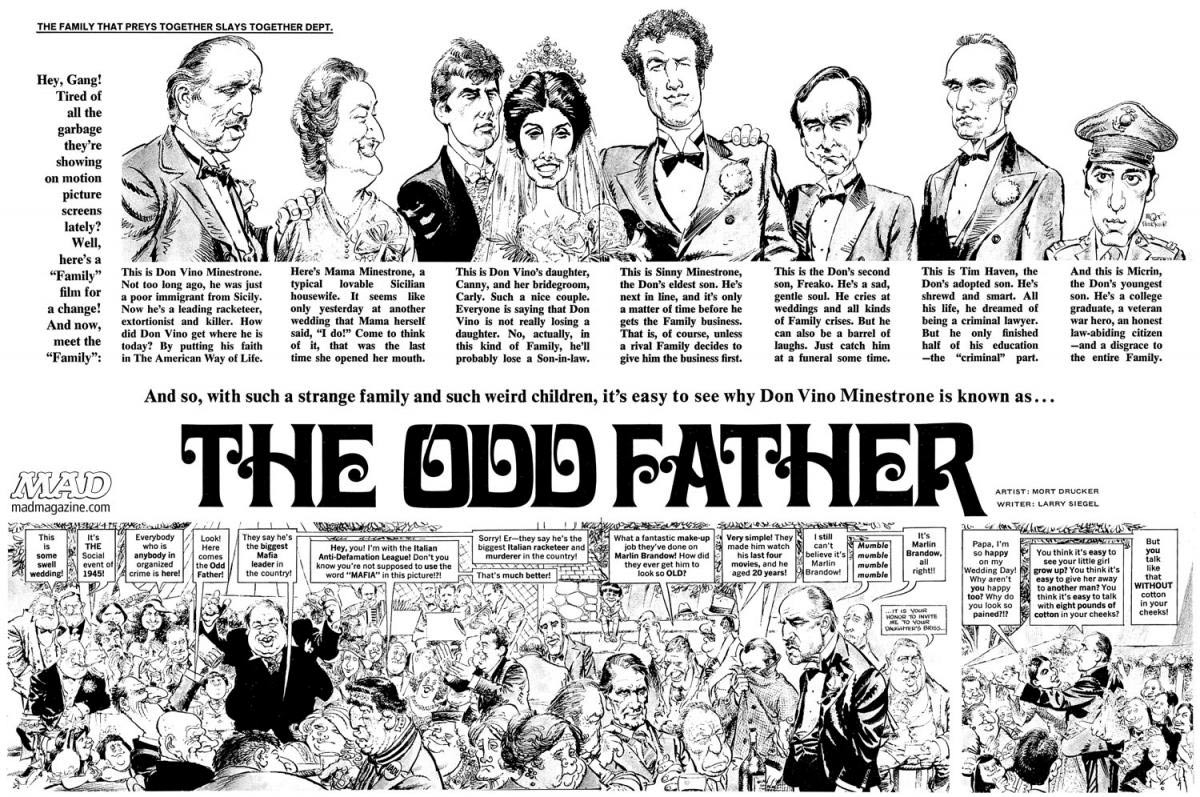
(1) Admittedly, there are few actual examples of this, but I still believe it. This scarcity is easily explained. In The Complete Book of Caricature, it was posited that the profession has traditionally been kinder when depicting women. The spectacularly sexist explanation was that women are thin-skinned so chivalric restraint is required. But the real reason was there were far fewer women in politics in 1991 when the book was published. In turn, this meant that most caricatures of women were penned for the entertainment industry where light ribbing is the norm. You obviously do not go for the jugular when you are doing a TV Guide cover or a Broadway actor sketch. You play nice. We even see this in Mad Magazine parodies of movies and TV shows. The text might be brutal, but the art is softball because the artists still want to get jobs from TV Guide. (Movie posters and comedy albums are other gigs you can get if you pull your punches.) Politics is different. You don't play nice in politics. Accordingly, the book included a Gerald Scarfe caricature of Margaret Thatcher that literally depicted her as a bitch shitting herself. In his defense, Thatcher was pretty terrible. Alas, I can easily imagine someone saying "No male politician would be caricatured so vulgarly." They would be wrong. Politics lends itself to toilet humor regardless of gender. But there is no denying that such imagery hits women far harder.

(2) Leslie Stahl discovered this dynamic quite dramatically. In her book, Reporting Live, she recalled a 1984 incident which illustrated how visuals trump facts. She did a piece on Ronald Reagan contrasting cheery footage of him visiting the Special Olympics with her own voice over talking about his pressuring Congress to cut funds for the handicapped. Ditto with the Gipper's visits to nursing homes and trying to slash Social Security. To her shock and horror, the White House loved it. They knew viewers would absorb the visuals and ignore her voice over thereby missing the irony entirely. "You guys in Televisionland haven’t figured it out, have you? When the pictures are powerful and emotional, they override if not completely drown out the sound. I mean it, Lesley. Nobody heard you." Yes, this is a story about visuals rather than personality. But the visuals would not have landed if Reagan were not already perceived as likable. I don't think this would have worked out for Nixon. As an artist, I am biased to believe in the power of images. It flatters me. But I must admit that having an established narrative to reinforce helped. Ultimately, this anecdote is about style over substance and therefore relevant to the issue of likability.

Tuesday, June 21, 2016

The Slog Ahead

We are tramping into battle with backpacks full of bricks - if not cinder blocks.

If Hillary Clinton is to win in the general election, she has to out-Sanders Bernie Sanders. Pick Elizabeth Warren for Vice President - or perhaps Bernie Sanders, as almost two thirds of Democrats think she should, according to the latest Reuters poll. This isn't a threat, it's a fact: You need to energize the base. 

This goes beyond unity or "healing the party." Here in Kentucky, there was no lefty or progressive animosity toward Jack Conway or Alison Lundergan Grimes - but no enthusiasm either. They were just boring, garden variety Kentucky Democrats. And that lack of enthusiasm is always fatal to a campaign.

Yes, they lost in an off-year election with dismal voter turn out. But a contest between two broadly unpopular candidates like Hillary Clinton and Donald Trump is certain to depress turn out too. And, of course, both Trump and Clinton will appeal to fear - fear of immigrants on one side and fear of Trump on the other - thereby driving down voter turn out even more. I'm not totally opposed to negativity, but if you don't give people something to vote for as well as something to vote against, many will stay home. Fear and guilt trips wear thin after a bit. Of course, low voter turnout always advantages conservatives who paradoxically always vote despite their eternal contempt for democracy.

This explains why Republicans often perform far better in elections than their numbers would suggest - and Democrats perform worse than they should. It's because Republicans energize their base while the Democratic Party's establishment holds theirs at arms length. They see the base the same way they portray Bernie Sanders - as a cranky complainer to pat on the head and patronize. To them, the base is a crazy, vaguely embarrassing grandpa yammering about FDR's and LBJ's legacy. And this contempt perpetuates a vicious cycle because our country's voter turn out is abysmal compared to most western democracies. And in a country with chronic low voter turn out, the game is all about getting your base to the polls.

And, make no mistake: The GOP base is pumped about Trump. The party establishment is protesting their own passing  - even as they are lining up to kiss the ring - but to conservative voters, the rank and file, their id is in bliss. Your genteel Republican friends may say they won't vote for him, but they ain't the base.

By contrast, centrist Democrats seem chronically determined to sabotage their party. Why?

I agree that money has poisoned our politics, but I am going to focus on another problem: The insidious conceit that this is a conservative country and that Democrats should campaign and govern accordingly. It isn't. A conservative country would not have elected a black man with the middle name Hussein. Twice. In landslides. His slogan was "YES WE CAN!" Hillary's is apparently "Maybe later." Joe Biden gets this:
I don't think any Democrat's ever won saying, "We can't think that big - we ought to really downsize here because it's not realistic," C'mon man, this is the Democratic Party! I'm not part of the party that says, "Well, we can't do it."
This is a problem for Clinton because she does not seem to think this way. Recall when she said single payer health care would never, ever happen. She opened with unconscionable scaremongering telling her audience that just discussing single payer would cost people their hard-won Obamacare:
I want you to understand why I am fighting so hard for the Affordable Care Act. I don’t want it repealed, I don’t want us to be thrown back into a terrible, terrible national debate. I don’t want us to end up in gridlock. People can’t wait! People who have health emergencies can’t wait for us to have a theoretical debate about some better idea that will never, ever come to pass.
Also please note that "never, ever" ain't "maybe later." That's not gradualism, that's defeatism.(1) She did tremendous damage to the claim that she was a "progressive who likes to get things done."(2)

What is additionally distressing is that so many Stockholm Syndrome-afflicted Democrats accept Clinton's deceptive reasoning arguing that it will give Republicans "permission" to repeal Obamacare.

Um, that's not how legislation works. Republicans have tried to repeal Obamacare over fifty times without asking anyone's permission.

Moreover, if you trade-in your old car when buying a new car, you are never without a car. You drive your old car to the lot and you drive away with a new, better car. In this instance, a "new car" that insures the millions of Americans that Obamacare left on the curb. But if single payer fails to pass, Obamacare remains in place. Period. You still have your old car.

The Washington Monthly is ordinarily a pretty centrist publication. But on single payer, they have been solid. I first learned about single-payer from them in the 1990s and have been pestering my friends about it ever since. In a more recent piece, they conceded that Clinton's argument was "a bit disingenous."

This timorous, dishonest nonsense has to stop if she expect to win the general election. It doesn't just alienate Sanders supporters, it is part of a cavalcade of gaffes that have plagued her primary campaign. Most are matters of faulty memory. For example, she ludicrously eulogized Nancy Reagan as a champion of AIDS awareness.(3) She also conspicuously forgot how grateful she was of Bernie Sanders' support in the 1993 health care fight. Her historically bogus rationalization for why her husband signed the Defense of Marriage Act was also profoundly troubling - particularly since he subsequently used it to pander to the religious right in radio spots. I don't think it helped him get their votes.

I want to be wrong about her - especially now that she is the nominee - but she keeps saying dispiriting things like this. Just recently, in a speech following the mass shooting in Orlando, she clumsily invoked the moment of togetherness "we" felt on "9-12," the day after 9-11. The problem was she was cribbing from Glenn Beck's rhetoric. Yes, it was only one line and she said few words against Islamophobia, but 9-12 is not a nostalgic touchstone for Muslim Americans. It was a period of fear.

Collectively, all these gaffes undermine her progressive credentials because they were scripted statements and apparently there were no progressive staffers in the room to say "Let's not phrase it that way." She desperately needs fact-checkers and progressive ombudspersons.

The avowed strategy of establishment Democrats is trying to appeal to centrist Independents; but as Bernie Sanders has proved, very many Independents are pretty progressive. Therefore, the whole rationale for their electoral behavior has evaporated.(4)

Has Hillary Clinton recognized this reality and adapted accordingly? Some evidence suggests not. Clinton's 2016 digs against Sanders echo her 2008 assaults on Obama. In both cases, she and her surrogates painted her opponent's supporters as naive and unrealistic cultists - not a little hypocritical if you recall the Kennedy-referencing Hope ads of Bill Clinton's 1992 campaign. Then again, in fairness, she has changed her tune on the Trans Pacific Partnership agreement which she once called the "gold standard" on trade deals, so there is that. But her surrogates - many of the same people who kept braying that Bernie Sanders is "not a real Democrat"(5) - are already worrying that Hillary Clinton moving to the left may alienate Independents despite the fact that is where Sanders had enjoyed some of his greatest strength.

You may be wondering how I can lecture about building enthusiasm while simultaneously criticizing the party's apparent candidate. Isn't that insincere, passive-aggressive sabotage?

No, because what will make or break this election is Clinton's actions, not mine. Almost nobody reads my blog, but this post could do some good in the highly unlikely event that anyone with Hillary Clinton's ear stumbles upon it. The election is literally hers to lose and she better do better if she wants to hold on to it.

As I have said before, I will most probably hold my nose and vote for Hillary Clinton, but others wont unless she works hard to prove her skeptics wrong about her and distances herself from her husband's infamous declaration that "The era of big government is over." Progressives have good cause to be suspicious, so she needs to court them in a pretty spectacular fashion.

Because if Hillary Clinton is waiting for Donald Trump's campaign to implode, her hubris will doom us. Recall that in between Ted Kennedy and Elizabeth Warren, Massachusetts sent Republican Scott Brown to Washington as their senator. Why? Because Brown's Democratic opponent took the seat for granted and barely campaigned. In 1980, nobody thought Ronald Reagan would get elected. He was dismissed as a total joke. Likewise, in 1988, the polls said that George Bush Sr. was toast.

Trump has been perpetually imploding this whole time and it has only helped him. This has been a bad week for Trump. This I know for the pundits tell me so. And keep telling me so - at least once a month. During the Iraq War, Thomas Friedman kept saying we should give George W. Bush's strategy another six months. Eventually, this became known as a Friedman Unit. If six months is a Friedman Unit, one week is a Trump Unit. In both cases, we've seen enough to know better.

EDIT:

Elizabeth Warren has been joining Hillary Clinton on the campaign trail, fueling widespread speculation that she will be the VP pick. As for hubris, coat tails, and the top of the ticket, I still think we'd be doing better with Bernie Sanders than Hillary Clinton. Hopefully, Liz Warren can give some lift. I am cautiously optimistic about our prospects, but things are definitely going in the right direction.

____________

(1) This is a far, far cry from what she said in 1994: "If, for whatever reason, the Congress doesn't pass health care reform, I believe, and I may be to totally off base on this, but I believe that by the year 2000 we will have a single payer system. I don't even think it's a close call politically. I think the momentum for a single payer system will sweep the country ... It will be such a huge popular issue ... that even if it's not successful the first time, it will eventually be." We should have ran her instead of Bill in 1992. I would joyously vote for Hillary Clinton circa 1992. Power-up the time machine and let's make the swap.

(2) The dishonest Clintonista conceit that Sanders would not be able to get his ambitious agenda through Congress was conspicuously ridiculous. If the GOP holds Congress in November, neither Democratic candidate could do anything beyond making vetoes and issuing executive orders, as President Obama has been forced to do. What makes anyone think Hillary Clinton would fare any better - particularly given the decades of "Hillary hatred" her supporters reflexively invoke? The only way to avoid that scenario is to take back Congress and you do that with enthusiasm, not a campaign semi-animated with tepid resignation.

(3) Hillary Clinton is too quick to praise conservatives. Recall when she praised Fox News personality Megyn Kelly as a "superb journalist"? Megyn Kelly was taking Donald Trump to task on his sexism - which everyone should - but Kelly and Trump are both fact-challenged racist bloviators. Neither is the hero in this scenario. Now I realize that politicians hand out compliments like party favors and that it is considered good form to praise your opponents and critics. The charm offensive is a time honored tactic. But New Democrats push the envelope in this area even as they scorn their own party. In his 2012 DNC speech, Bill Clinton praised Ronald Reagan and snubbed Jimmy Carter. Jimmy was understandably miffed.

(4) Indeed, the fact that Independents now comprise the "largest party" in the U.S. is due in a large part to centrist "New Democrats" driving old Democrats away. Bill Clinton signed NAFTA. This betrayal of labor demoralized the party's foot soldiers. In the Republican Party, the grunt work of ringing doorbells and phoning voters is done by Evangelicals. In the Democratic Party, it is done by union members. Ideals and party identity aside, it was tactically suicidal and directly resulted in Newt Gingrich and the Republicans taking Congress in 1994. Clinton apologists like to claim that Newt made Bill do all that bad stuff like DOMA, DADT, welfare, the crime bill etc. But Newt did not make Bill sign NAFTA, nor did he make the Clintons join the DLC's campaign to turn the Democratic party into GOP Lite. Bill Clinton accomplished a lot - of conservative goals. Slick Willie finished the Gipper's to-do list.

Hyperbole? Not quite. Here's a bit from Clinton's the aforementioned 2012 DNC speech: "When I was a governor, I worked with President Reagan in his White House on the first round of welfare reform." He was still proud of it at that point.

(5) Yes, Bernie Sanders has been a declared Independent for many years. But he has always tirelessly championed what the Democratic Party was supposed to stand for. When Hillary Clinton was supporting Barry Goldwater - who pioneered the Southern Strategy by campaigning against the 1964 Civil Rights Act - Bernie Sanders was getting arrested fighting against segregated housing. A friend of mine actually argued that it was okay to stack the deck against Sanders because he is "not a real Democrat." Well, if you think it is okay to hose outsiders, become a Republican. But given the choice between an Independent running as a Democrat and a Republican running as a Democrat, I'll go with the former. Unfortunately, that is not an option anymore. The best I can hope for is a "unity ticket" for a coalition government.

Sunday, May 29, 2016

On Pain and Perception

I forgot to blog about something that bothered me a while back.

It seems a few medical students at the University of Virginia actually believe that blacks feel less pain than whites. Maybe they are projecting their own lack of empathy, but I suspect culture has a hand in it. Only a culture with a guilty conscience could construct such a notion to excuse routine institutional violence.

It makes you wonder how these medical students think. If blacks feel less pain, how effective did these future physicians think whipping slaves was back in the day? I guess they think it wasn't all that bad. 

And white society has often portrayed blacks as "oversexed," but how does that work with less-sensitive nerve endings?  I suppose they imagine black sexuality is all hormones with a disappointing payoff - which sort of sabotages related fantasies many whites have if you stop and think about it. Fortunately, bigotry stops all thought on the topic of its target, so those fantasies are quite safe.

Bigotry and ignorance form a feedback loop. The very definition of the word "prejudice" means judging without evidence. The less we listen to others, stubbornly fortifying our assumptions and cementing our mistakes, the less information we have. It is a callous cycle,(1) which frequently becomes a vicious one.

By contrast, empathy makes us more objective because it makes us step outside ourselves and consider others' experience and perspective. In 
my book, I argue that reason and compassion often go together and that this combination summed up the goals of both the Enlightenment and the Progressive Era.(2) I note that the word "understanding" has two definitions: compassion and comprehension. Likewise, "thoughtful" means both contemplative and kindly - ditto with "considerate."

Of course, this is an oversimplification. Although liberalism rises with education, it does not inoculate you against the more complex malady of bigotry. The authors of this study argue that spending time with those different than yourself is the best tonic against racism. Yes, but you can still spend time around those who are different and be a bigot. I see a combination of factors. Time with others is more likely to activate compassion (if you have any), and an alert person is more likely to learn from the experience. After all, experience is just an opportunity to learn - unfortunately, an often wasted one. But the linkage between compassion and intelligence has been shown because reading literature improves both.

Obviously, doctors need both to perform competently in their chosen occupation.(3) The first study is shocking because doctors should be smarter, but also because treating pain is essential to their profession.

EDIT 02/27/17:

This issue is getting a little more attention.

_______________

(1) 
Thinking about this dynamic has taken me on some tangents. A few weeks ago, I mused that the Dunning-Kruger Effect applied to compassion as well as competence. Exhortations to be more compassionate tire callous people and, playing out the jukebox theory of emotions, they read their fatigue as evidence that they have already done enough for others.

(2) "
Ayn Rand's 'Objectivist' label is contradictory. Both logic and compassion require looking beyond our subjective perspectives and selfish interests. In fact, combining logic and compassion was what the Enlightenment was all about. It advocated taking in the big picture to improve the common good. In short, you cannot be selfish and objective at the same time because of bias. The word 'objective' sounds trustworthy, so Ayn Rand used it. Likewise, some religious cults incorporate the word 'science' into their names. But a self-interested, narrow mindset is not objective any more than a religion is scientific."

(3) 
This isn't just a question of medical ethics. Compassion is no less critical to citizenship than intelligence. I explore this point more in the chapter entitled "Liberty, Equality, and Empathy" and here on this blog. Obviously, I do not think that conservatives make model citizens. But perhaps that can change. Appeals to human decency haven't had much of an effect on them, so perhaps we should try patriotism. We should hammer home the fact that being intolerant is unpatriotic. They don't mind being called the former, but the later gets their attention. Of course, nice liberals are loathe to question others' patriotism and that is exactly what enables conservatives.

Sunday, May 22, 2016

Bitburg Revisited

Excuse the mixed metaphor, but I've seen some pretty spectacular straw-grasping in my day, but the random rationalizations Confederate apologists often concoct take the cake. Maybe it's straw cake.

In my previous post, I analyzed their most plausible argument against removing Confederate monuments and found it wanting. I looked at a few ludicrous ones too, but I held back my favorite moment:

At one point, one opponent actually claimed that the local Confederate monument was built to honor fallen soldiers on both sides of the U.S. Civil War. As is so often the case with the Dunning-Kruger effect, he was as wrong as he was certain - and he was absolutely certain.

It reminded me of a moment in Paul Slansky's book, The Clothes Have No Emperor: A Chronicle of the American 80s. In it, Slansky gives a nearly day-by-day account of the Reagan Era and Administration. Of interest here is Ronald Reagan's infamous 1985 Bitburg cemetery visit fiasco:
4/11 The White house announces that President Reagan will lay a wreath at the Bitburg, West Germany, military cemetery housing the graves of both American and Nazi soldiers. Oops! Correction: no Americans are buried there.
That clarification was significant. For Reagan's aides, the situation only deteriorated from there. It was not because Reagan's White House Communications Director was fascist apologist Pat Buchanan - most Americans probably did not know this about him at the time. Nor was it those nine Bush Senior campaign officers that were outed as fascists in 1988. That came later. No, it was because everything President Reagan said made the approaching photo-op both comedic and horrific
4/18 Michael Deaver - who somehow failed to notice Nazi gravestones last time he was there - is back in West Germany searching for an appropriate concentration camp to add to the President's itinerary. Asks Rep. Pat Schroeder, "What are they looking for? The right light angle?" Meanwhile, Reagan defends his visit to Bitburg by claiming the German soldiers "were victims, just as surely as the victims in the concentration camps." Says an aide,"Oh my God!"
4/19 Elie Wiesel - fortunate enough to be accepting a medal from the President on the same day The New York Times carries the headline "Reagan Likens Nazi War Dead to Concentration Camp Victims" - tells his host, "That place, Mr. President, is not your place. Your place is with the victims of the SS." Reagan puts on his sad face.
4/29 President Reagan defends the Bitburg visit as "morally right," adding, I know all the bad things that happened in that war. I was in uniform for four years myself." He does not claim to have filmed the death camps.(1)
5/5 Having atoned in advance with a visit to the Bergen-Belsen death camp, President Reagan spends eight minutes at Bitburg, where cameras are forced to shoot the ceremony from poor angles. He cites a letter from 13-year old Beth Flom who, he claims, "urged me to lay the wreath at Bitburg cemetery in honor of the future of Germany." In fact, she urged him not to go at all. Summing things up, he says, "It's been a wonderful day."
The parallels with Confederate apologists grow with scrutiny. There are the awkward false equivalencies, of course. There's the reflexive lying as well.

But there is also an attempt to woo a particular ethnic demographic. As Russ Bellant explained in the link above and in his book, Old Nazis, the New Right, and the Republican Party, some Eastern Europeans were enthusiastic Nazi collaborators in WWII - hands-on accomplices in the Holocaust. They had formed their own fascist parties before the war and fought alongside the Nazis during it. But after the war, they found it easier to slip into the U.S. because they were not Germans and therefore, technically, not Nazis. No, they were members of the Latvian Legion, the Baltic Legion, the Belarus Brigade, the Romanian Iron Guard, or the Hungarian Arrow Cross. All formed SS-linked Waffen combat units.

Once here, they took over many leadership positions in immigrant communities; occasionally, strong-arming their way in. Then they became formally involved in Republican Party politics within the National Republican Heritage Groups Council. These were the type of white ethnics that Pat Buchanan advocating catering to - not just Southern whites.(2)

Like white Southerners, many in these minorities were/are opposed to these fascist groups and their goals. But the fascists controlled a big enough chunk that they had some clout. They knew how to manipulate group pride, bully, and blur crucial distinctions. And they were also aided by the ignorance or denial of others. All too often the desire to feel good about your group prevents you from hearing anything bad about it and nationalists always take advantage of that. People are people and that is my point.

But in both cases, there are also people like Beth Flom urging us to face the past honestly and carefully choose who we honor. We should follow her example.


________________

(1) Reagan had made that claim on two previous occasions. As Slansky wrote: "12/6 [1983] The Israeli newspaper Maariv reports that during a meeting with Prime Minister Yitzhak Shamir, President Reagan - who spent World War II making training films in Hollywood - claimed to have served as a photographer in an army unit filming the horrors of Nazi death camps." Two months later: "2/16 [1984] Welcoming Nazi hunter Simon Wiesenthal and Rabbi Marvin Hier to the White House, President Reagan again claims, according to Hier, to have 'photographed Nazi atrocities while he was with the Signal Corps.' When reporters question this account, James Baker elicits from Reagan the clarification that he 'never left the country' during the war and 'never told anyone that he did.' As to how Shamir and Hier - in two separate meetings - could have come away with the same wrong story, Baker has no explanation."

(2) The Bitburg visit might not have been a dog whistle like then candidate Ronald Reagan's 1980 Philadelphia, Mississippi speech. It could have been an honest error compounded by the Gipper's gaffes. You can be an anti-communist without being an anti-semite. But much of the leadership of the RNC's Heritage Groups Council were both and Reagan was trying to encourage their support. Reagan spoke at a luncheon for them two weeks after his Bitburg visit. As Russ Bellant wrote in the introduction of his book: "If President Reagan needed a boost after the Bitburg fiasco, this was the crowd to supply it. To the assembled media, Reagan's visit that afternoon appeared as a routine stop, perhaps paying a re-election debt. The Republican Heritage Groups Council did, in fact, help elect Reagan. And they gave him a long standing ovation that afternoon at the Shoreham [Hotel]. To some of those attending the 1985 Council meeting, Reagan's rehabilitation of the Waffen SS must have offered a sense of personal and historic vindication." Vindication. That is what we are trying to avoid.

Monday, May 16, 2016

Statuary isn’t History

Closet Confederates make the most moronic arguments against removing their monuments.

Their strongest argument is that monument removal is somehow erasing history" or trying to sanitize the past." They compare it to burning books or to Stalin having his old rivals airbrushed out of official photographs. It's not the greatest argument, but it is the best they've got.

U
nfortunately, the argument hooks a lot of good folks who think such statues act as valuable reminders of our nation’s sins and follies. They say, Those who forget the past are doomed to repeat it." This version of the argument is often well-intentioned but wrongheaded because these monuments obviously do the opposite: They reinforce the militant ignorance of bigots who deny our society has ever done anything wrong. Or, if they perfunctorily admit any wrongdoing, they disassociate self-evident connections to quickly close the discussion. “Yes, slavery and racism are bad - BUT the Civil War was not about that.”

Except it most definitely was. There is no honestly denying that the Civil War was fought over slavery because the Confederates had said so themselves in their twisted imitations of the Declaration of Independence: the Articles of Secession. Like the Declaration, these documents presented a laundry list of perceived grievances - and Yankee agitation against slavery is unquestionably their number one complaint. Click on the link above and search the page for the word slave." It appears again and again. These smoking gun documents amount to a terrorist martyr video. Their motive is known. Case closed. 

Also note that the link above is to an organization dedicated to preserving Civil War battlefields, so they are hardly trying to erase history or sanitize the past. Bottom line: If these statues actually educated anyone their admirers would make smarter arguments. They might at least abandoned long-debunked ones
                                                                                           
This issue isn’t rocket science. When we rebelled from England in 1776, we tore down statues of King George III. Did we forget we were once colonies as a result? Of course not. After the French Revolution, they did the same with their king's public statues (but they preserved the palaces). Likewise, they have not forgotten their monarchist past. This isn't Pol Pot's Year Zero." Monuments are meant to celebrate things we are proud of. When we are no longer proud of them, we logically take them down. This is not just to spare ourselves embarrassment but because we do not want our citizens to celebrate terrible behavior.


But reactionaries cannot grasp this. Recently, they threw a hissy-fit over the Treasury Department's plans to redesign the twenty dollar bill and replace Andrew Jackson with Harriet Tubman. This was not just a question representing more women and people of color – which racists portrayed as “pandering to blacks.” Jackson was a genocidal maniac who was pretty casual about killing people - including his fellow whites. Although I approve of replacing Jackson with Tubman, getting him off our money was necessary and long overdue no matter whom we replaced him with. Common sense says we should not honor our worst leaders. There are more great Americans than practical denominations of bills, so mediocrities like Salmon P. Chase should be replaced - but we should start with the absolute monsters.

Again, this isn’t rocket science. Ask yourself this: Were Russians wrong to take down statues of Stalin? What about all those statues and murals of Saddam Hussien that were all over Iraq? There's that Orwellian-named Victory Arch that Saddam made for the fallen Iraqi soldiers of the Iran-Iraq War, which of course nobody won. It's dismantling was arrested and reversed. But that's okay because I'm sure it cannot possibly be politicized or used to fuel future militarism or hatred. Perhaps you think Germany would have been wiser to keep its Nazi monuments. But I think not.

I did not make that last analogy lightly. My father came over from Germany in the mid 1960s, so I obviously had family members who served in the Wehrmacht in World War II. This begs the question: What if some Nazi monument was still standing and I made the same arguments as Confederate monument lovers to prevent its removal? You would reasonably suspect me of having Nazi sympathies.

You may say it’s not the same, but it is. Otherwise, the same arguments could not be made in both cases:

In war, people get drafted into a cause they may or may not support. Some might even be reflective enough to recognize they are the baddies and be ambivalent - or actively subvert the war effort, such as the students involved in the White Rose group in Nazi Germany. As James W. Loewen noted in Lies My Teacher Told Me, a lot of Southerners sabotaged or fought against the Confederacy. We should be celebrating them.

And when death is faced there is bravery as well as cowardice, even if it is for an evil system. Seriously, I have to ask these Confederate apologists how do they make that argument without realizing how easily it can be flipped to defend any evil system? How is their pet heritage the exception that proves the rule?

Finally, aggressors may later find themselves on the defensive and then say they are “fighting for their homes and families,” as Germans were told without irony when the Red Army was rolling toward Berlin. (Also, when Germany invaded Poland, they claimed that Poland had invaded Germany.) And recall that the Civil War started when the Confederates fired the first shot on Fort Sumner. Yes, most of the war was fought in the South - but not at first. That changed when they started to lose, which was also about the time of Morgan's Raid through the Midwest. Therefore, the War of Northern Aggression" wasn't.

If I had made any of these arguments about “bravely defending their homeland” to defend a monument to the German army, you could and should say that I am missing the point: A heroic-looking monument to the bravery of the Wehrmacht would obviously and correctly be perceived as glorifying Nazism.

But closet Confederates are oblivious to the obvious: Trying to confuse monuments with museums, more than one online opponent has asked me, Why have 7 concentration camps been preserved in Europe???" (Always with superfluous punctuation. It must be important to the talking point.) Clearly, the camps are preserved as museums to show that genocide is evil and horrific, not to honor fallen Nazis. Their respective purposes are completely different: The first educates, the second celebrates. But I am probably arguing with people who thought that President Ronald Reagan's Bitburg cemetery visit was a brilliant idea.

I will explore that parallel more on that in the next post.