Wednesday, July 30, 2014

Disappointment Redux

In the introduction to my book, I said something to the effect of my being the “Richard Dawkins of American History." I'd like to retract that analogy now because his ass-haberdashery has gotten worse.

It is not that I object to his abrasiveness - quite the opposite: I embrace abrasiveness. After all, I am both a cartoonist and a fan of satire. Mark Twain had called laughter humanity's greatest weapon:

 Power, money, persuasion, supplication, persecution—these can lift at a colossal humbug—push it a little—weaken it a little, century by century; but only laughter can blow it to rags and atoms at a blast. Against the assault of laughter nothing can stand.

But I distinguish between assholish tone and assholish content. The former is often both entertaining and necessary for the reason I gave above.  Although, I suppose I should not be surprised by the high correlation between the two. Likewise, Bill Maher has been disappointing more and more - from his whining about his taxes to his misogynistic analogy on Israel's recent invasion of Gaza. Full disclosure: I also praise Maher in my book when contrasting his libertarianism with Penn Jillette's.

Indeed,
I had asked a friend about Dawkins' ass-haberdashery earlier when there were less egregious quotes out there. After some discussion, I decided to leave it in. I took a conscious risk and it was a bad call.

My exact words were:
If I convert a conservative, that is a bonus but I am not banking on it. I am somewhat brusque and I expect they will react to my evidence the same way Creationists react to dinosaur bones. So, I suppose it is my intention to be the Richard Dawkins of American history by bluntly presenting long-established facts: The founders were mostly Deists – deal with it. The Civil War was fought over slavery – deal with it. This is not a “reach across the aisle” sort of book. Both the title and thesis effectively prevent that. 

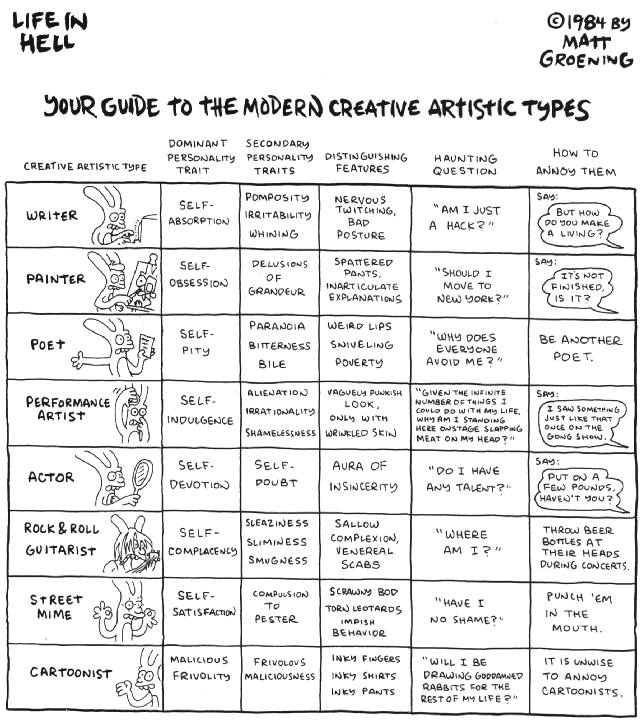
Plus, Richard Dawkins disses art and history? You can well imagine what I think of that. Yeah, fuck that guy. Cartoon History of the Universe creator Larry Gonnick should go medieval on his ass. As Matt Groening had once put it, “It is unwise to annoy cartoonists."

EDIT: The Dawkins bit has been dropped.

Sunday, July 27, 2014

Evolving Opinion on Palestine

Many have taken note of Jon Stewart's evenhanded coverage on Israel's current incursion into Gaza.

This can be seen in 's Daily Beast piece “How Jon Stewart Made It Okay to Care About Palestinian Suffering" and David Weigel's piece in Slate “When You’ve Lost Jon Stewart, You’ve Lost Middle America." Stewart definitely deserves great credit, but I want to point to another factor that nobody I know of has mentioned yet: Recent experience.

For eight years, anyone who opposed George W. Bush and the Iraq War was accused of hating America or not supporting the troops. President Barack Obama is now midway through his second term, but the memory is still very fresh. Hyperbole like that does not fade quickly. G.W. Bush said, “You are either with us or you are with the enemy." Eventually, that either/or rhetoric wore out and lost traction with the American public. I think that same dynamic is starting to happen on Americans' thinking about Palestine. For decades, Jews who criticized Israel where called “self-hating" and Gentiles who did were called anti-Semitic - a situation that Jon Stewart illustrated in a brilliant segment.

Stateside, these absurd accusations allowed conservative institutions like the National Review to harbor Holocaust deniers as long as the publication itself remained hawkishly pro-Israel. Likewise, right wing Evangelicals unconditionally support all of Israel's actions - not out of any great love or respect for the Jewish people but because they believe the existence of Israel is a precondition for Jesus' return, at which time they expect all Jews to convert to Christianity.

A great many Israelis see their current government basically the same way anti-war Americans saw G.W. Bush and the occupation of Iraq and Afghanistan. There are even conscientious objectors in the Israeli Defense Forces who refuse to take part. These Israelis obviously do not desire their own deaths any more than the U.S. peace movement supported Al Qaeda. They do, however, see their government's actions as excessive, immoral, and counterproductive. My guess is that Americans are finally seeing these parallels.

Not conservative voters, of course. A 2012 poll found that 63% of Republicans still think that Saddam Hussein had weapons of mass destruction when we invaded Iraq in 2003, so I am not holding my breath for those with a hard-on for the Apocalypse. But the rest of the electorate is recognizing the right's appetite for bellicose fabrications, false dichotomies, motivated reasoning, and perpetual rage-think.

Granted, we Americans collectively went a little crazy after 9-11. Anger leads to the dark side, and like Yoda said to Luke, progressives had to say, “The cave! Remember your failure at the cave!" We still do.

Of course, I am not saying we should frame the argument as a spiritual failing. Instead, we should make the more straightforward argument that anger makes you stupid. Or, as Ben Franklin put it in Poor Richard's Almanac, “Take this remark from Richard poor and lame, Whate'er's begun in anger ends in shame."

Angry stupidity seems to be finally falling out of fashion. At least now it is a bit easier to call it out.


EDIT 01/22/26:

Okay, I thought I'd included Anthony Bourdain in this post, but I suppose I was thinking of posts I'd made on Friendface or Shitter. Both Bourdain and Stewart deserve great credit for what they've done.

Wednesday, July 9, 2014

Native Land

Speaking of leftist patriots, do you want to watch a B&W WPA movie about America made by unapologetic reds like Paul Robeson?* A movie that, like Linus in A Charlie Brown Christmas, breaks it all down and explains what America is truly all about?

Of course you do! Because it kicks the living shit out of the phony patriotism of unhinged charlatans like Glenn Beck. (Although I would not put it past Beck to try to co-opt this along with all the other New Deal iconography he has shamelessly strip-mined.) It was filmed in 1942 and titled Native Land. 

Parts of the narrative are politically problematic. Native Americans would have a valid critique, which makes the tile a little ironic. And it is admittedly pretty preachy. But on the whole it nails it. 

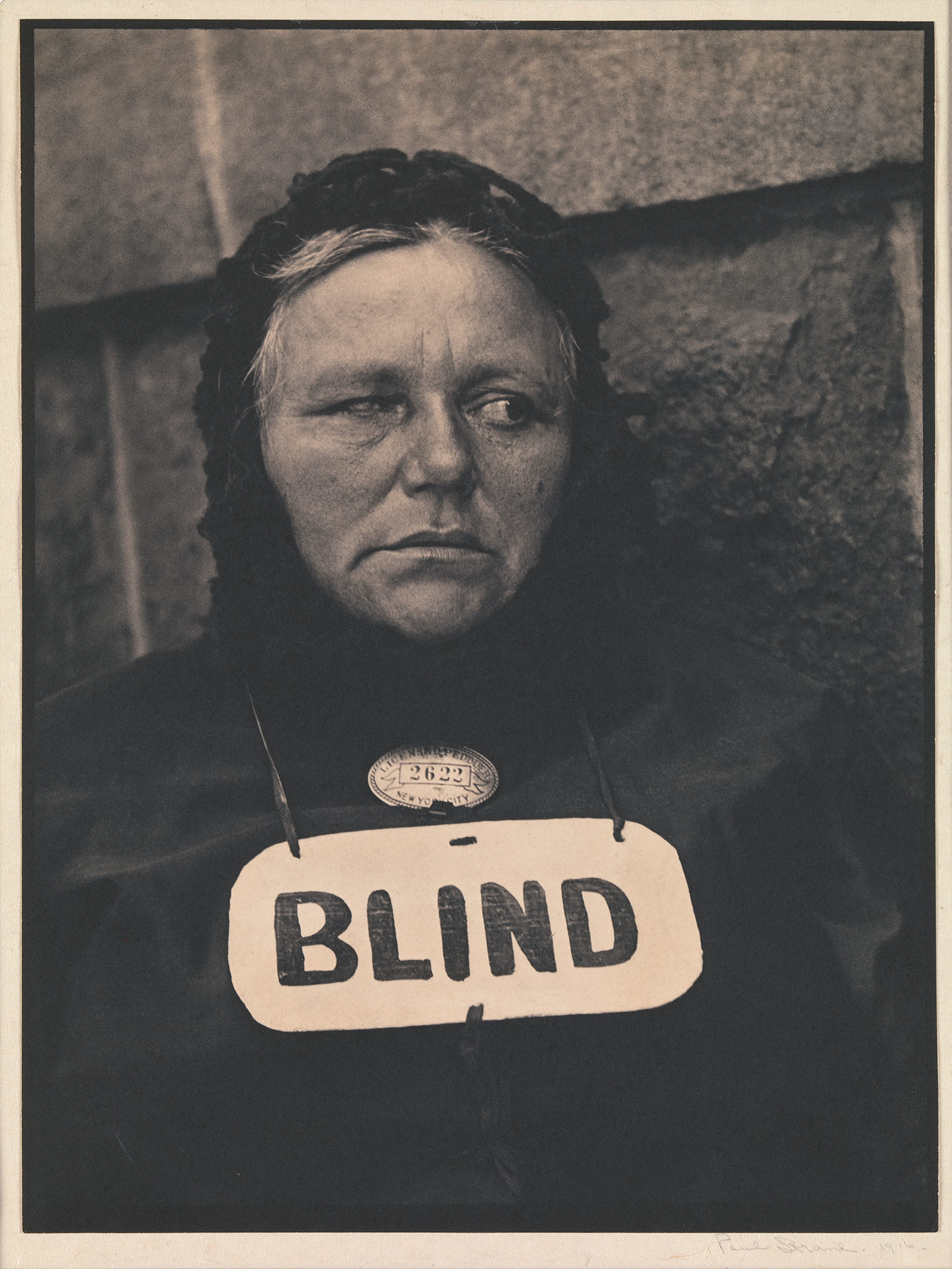
It boasts brilliant cinematography by the legendary photographer Paul Strand and an orchestral score by composer Marc Blitzstein - that dude who Hank Azaria had played in Cradle Will Rock. 

Watch it. It starts out all ponderous and cheesy, but stick with it. Hell, embrace it.


______________

* I am not, nor ever have been, a member of the Communist Party. Although, I am a Wobbly.

Tuesday, July 8, 2014

A Fortuitous Fourth

This past Fourth of July holiday weekend saw a couple of great posts by other people that align quite nicely with my previous post and my book as a whole.

A friend of mine reposted a great 2010 Steve Rendall article entitled, "The Right's Library of Fake Quotes: Putting Words in Dead People’s Mouths." I have been a fan of FAIR for many years, but somehow I had missed this particular piece. I cited many of their articles in my book, including these two which I ritually post every Martin Luther King Day.

Richard Riis posted one called "Independence Day Special: Thirteen Facts About America Conservatives Would Like You to Forget." Item one reminds me of that song in the musical 1776 that Richard Nixon got dropped from the 1972 movie version. In it, the opponents of independence sing their praises of conservatism - "To the right, ever to the right - never to the left." It was put back in for the DVD release. Here is the audio.

And finally, speaking of things I had missed, Bill Moyers & Co. had posted an excerpt of historian Jill Lepore's great 2010 book The Whites of Their Eyes: The Tea Party’s Revolution and the Battle Over American History. She notes, among other things, that during the 1976 Bicentennial Celebration, it was the left that was claiming the rhetoric of the American Revolution and they had formed a "TEA Party" before - except that their acronym stood for "Tax Equity for Americans" rather than "Taxed Enough Already." They protested against tax loopholes for the rich.

I have just started her book and I am kicking myself for not finding it sooner. I read almost a third of it in one sitting and I am a slow reader who likes to take lots of notes. Forget my book - buy her's!

Just kidding. Buy mine too. Since you are already there and everything.

Wednesday, July 2, 2014

That Quote is Totally Legit

WARNING: NERD ALERT - All Others Kindly Skip

It is no newsflash that the Internet is awash with bogus quotes. People especially enjoy putting words in the founding fathers' mouths. The left is nowhere near as guilty of this postmortem oral surgery as the right is. (This is probably because most leftists like change and do not think we should live the same way we did two centuries ago.) But there is also no denying that they do it too from time to time.

Therefore, I have made a point to trace all quotes back to their primary sources whenever possible. For you non-history majors, "primary sources" means official published collections of the historic figure's papers. When I quote secondary sources, i.e. the words of historians rather than historic figures, it is because the historian's opinion or presentation is my focus. But then I cite the historic figure's quote elsewhere.

For example, in the introduction to my book, I quoted social historian Stephanie Coontz quoting James Madison. In that instance, I cited to her book. But I when I later explore that Madison quote even further, I cite to Madison's papers. In the first instance, my point was to show that academics are already familiar with this material even if popular culture is not. In the second instance, my focus is on Madison's thought.

Quote sourcing can be fascinating detective work. Scott Campbell's attempt to track down an elusive Justice Louis D. Brandeis quote that Ralph Nader was fond of shows how ambiguous things can be. So this post is sort of the historical equivalent of a "behind the scenes peek" DVD extra.

You saw the nerd alert at the top, right?

In the course of writing my book, I ran across many quotes that I could not verify and therefore could not use. They might be consistent with other things that the figure has said elsewhere, but as the saying goes, "Close only counts in horse shoes and hand grenades."

This Thomas Jefferson quote in particular eluded verification for quite some time. I am happy to report that it is quite legitimate:

I hope we shall take warning from the example and crush in it’s [sic.] birth the aristocracy of our monied [sic.] corporations which dare already to challenge our government to a trial of strength and bid defiance to the laws of our country.

- Thomas Jefferson, Writings of Thomas Jefferson, ed. Paul Leicester Ford (New York: G.P. Putnam’s Sons, 1899), 10:69.

Rather than toil for no profit, I will be lazy and just cut and paste my end note:

I was initially skeptical about this quote when I ran across it because corporations had not yet gained the great power that they wield today. Banks were the exception, so Jefferson was probably talking about banks (and he blasted banks a lot). But he usually just said “banks” rather than “corporations” so the quote seemed fairly fishy. Moreover, I had already seen several uncited variants that frustrated my every effort to verify them. One person, thinking he or she could improve on Jefferson’s prose, had apparently replaced the word “birth” with “infancy,” further complicating my search. Often such tweaks made the language seem dubiously modern. Jefferson was famously fond of rambling at length and the variants I had seen were suspiciously pithy. If a quote is short and to the point, it is probably not one of Mr. Jefferson’s. I had also seen numerous Frankenstein variants – quotes stitched together with parts of other quotes. Some elusive variants turn out to be legitimate because a historical figure had a favorite phrase that frequently reappears in their works. Today, we call them “buzz words.” Although a variant may be consistent with other verified quotes, consistency is insufficient by itself. Each quote must be individually verified in a published collection of historical papers and this quote finally fits the bill. For example, except for the use of the word “corporations,” this quote is quite similar to the quote I used immediately previous to it: Both speak of a moneyed aristocracy trying to subvert the government. But until I found a source, I could not use this quote no matter how similar it sounded to the previous one. This is an anal-retentive business.

So, if you are going to use this quote, please provide the full citation and do not correct the grammar or tweak the text in any way.

And send people here. I would appreciate the traffic.

Monday, June 30, 2014

Hobby Lobby Horse Hockey

Today’s SCOTUS Hobby Lobby decision was an obvious assault on logic and common sense: Not only are corporations considered “immortal persons," they can now have religious convictions and therefore deny their employees birth control on moral grounds.

As humorist Andy Borowitz summed up in his parody news story style, “By a 5–4 vote on Monday, the United States Supreme Court settled a dispute that Justice Samuel Alito said was 'at its core about the rights of women versus the rights of people.'" But the problem goes beyond the legal fiction of corporate personhood. It shows how the rhetoric of freedom is routinely turned on its ear by conservatives who have chronic difficulty recognizing others' rights and it shows why they really hate government.

Various conservatives have called today's decision a victory for religious liberty. It is an Orwellian choice of words because it is actually a victory for religious coercion. Russell Moore, President of the Ethics & Religious Liberty Commission of the Southern Baptist Convention, tweeted, “#HobbyLobby wins. This is a great day for religious liberty. Government is not lord of the conscience.”

No, apparently your employer is.

This is familiar conservative illogic. It is even found in the mouths of self-identified “libertarians.” Indeed, as conservatives have co-opted libertarian rhetoric, libertarians have become more conservative. At this point, libertarian ideology has largely become a hodgepodge of elaborate rationalizations to excuse coercion. Corporate personhood is only one among many institutionalized absurdities that they enlist - states rights is yet another. Both are employed to deny the rights of breathing human beings. The Libertarian Party's morphed position on abortion illustrates this. As I wrote in my book:

Ayn Rand was staunchly pro-choice. “Abortion is a moral right – which should be left to the sole discretion of the woman involved.” She reasoned, “An embryo has no rights. Rights do not pertain to a potential, only to an actual being.”(1)(emphasis original) Her words could not possibly speak clearer. This issue was once so central to libertarian thought that, in the early 1980s, they printed tee-shirts with the image of a pistol, a pot leaf, and a woman symbol with the slogan “Libertarians are pro-choice on everything.” Well, they are no longer pro-choice on abortion. Today, the Libertarian Party regularly fields anti-abortion candidates for president. Indeed, they began back in 1988 with Ron Paul. Naturally, they reconcile this with their rhetoric of liberty by saying that your freedom should be left to the states. As one anti-Ron Paul graphic I saw put it: “Government so small it fits in your uterus.”

The court's Hobby Lobby decision is actually the predictable result of such thought. Consider this incident I recounted in the book:

When promoting his latest book, Every Day is an Atheist Holiday! [Penn] Jillette appeared on Glenn Beck’s show, “The Blaze.” Jillette argued (2) that a religious pharmacist “absolutely” had the right to deny a woman the abortion pill because the pharmacist’s individual conscience is sacred. But what about the woman’s? Beck did not ask that question, but they both probably would have said that she can go to another pharmacy. But what if there are not any more in the area? Then it sucks to be her. But individual conscience is actually not all that sacred to Penn Jillette. He added that the pharmacist’s employer was free to fire him and that would be fine just so long as the government did not get involved. The employer has an individual conscience too and apparently that trumps the pharmacist’s. Money trumps many things. It all seems pretty reasonable until you stop and think about it. Then you realize that there is a hierarchy with women at the bottom and bosses at the top. To paraphrase George Orwell, some consciences are more equal than others.

I was happy to see that I had anticipated Justice Ruth Bader Ginsburg’s dissent in the case. She wondered if the exemption would “extend to employers with religiously grounded objections to blood transfusions (Jehovah's Witnesses); antidepressants (Scientologists); medications derived from pigs, including anesthesia, intravenous fluids, and pills coated with gelatin (certain Muslims, Jews, and Hindus); and vaccinations." In my rejoinder to Penn Jillette's argument, I had added:

You do not have to be a genius to realize that allowing pharmacists to deny birth control is only going to prompt theocratic prudes to become pharmacists. Why not allow Christian Science pharmacists to deny all prescriptions the same way they try to deny their children medical attention? Granted, they would be unlikely to find jobs, so you could say that the market would prevent that. But the principle still remains the same: The law should not allow others’ religious convictions to restrict your bodily autonomy. It is an abuse of your position to use your job to force your personal mores or desires on others. Likewise, bosses cannot demand sex from employees to grant raises or promotions. That is illegal – and should be. The predatory employer’s rationale is “If you do not like it, you can work someplace else."

In short, libertarianism is not pro-freedom but anti-government. To them, there is no coercion until government gets involved. Obviously, this philosophy does not recognize when government is trying to protect our freedoms. But one of the most fundamental functions of government is protecting us from each other. That is why we have laws against murder, robbery rape, etc. And this includes civil law as well as criminal law: If someone breaks a contract with you, you take them to court instead of taking the law into your own hands. This is some pretty fundamental stuff:

Take gay marriage, for example. On Glenn Beck’s show, Penn Jillette asked when government got involved in love and marriage as if this were some unprecedented new intrusion. Um, try the Code of Hammurabi. Marriage was a monetary transaction for millenniums before love got involved. And property remains a large part of marriage today, thus disputes over divorce, custody, or inheritance. As long as people own homes, have children, and have disputes, government has a role to referee. The notion that government should not get involved is absurd. Without a referee, “Might makes right" would decide every dispute. Libertarians ignore non-governmental bullying and insist government must never intervene to stop it. During the show, Jillette emphasized, “We do not want to be a country of bullies," But his philosophy is a bonanza for bullies and he should be smart enough to see that.

So, yes, corporate personhood is a big problem at the heart of this case, but it is not the only one. Misogyny is obviously another problem. But lopped on top of those is the right's opposition to the proper role of government. And that opposition has historically been grounded in their love of bullying and hostility toward liberty and equality. After all, it was not until after we began recognizing and upholding the civil rights of African Americans in the 1950s, that conservatives began screeching about “federal tyranny." But every other form of tyranny seems to be pretty okay to them.


_____________

(1) Anne C. Heller, Ayn Rand and the World She Made (New York: Doubleday, 2009), 320-321.
(2) The abortion pill part starts at 28:47. Throughout the broadcast, Penn Jillette gave Glenn Beck passes on things he obviously should not have. For example, Jillette “absolutely” agreed with Beck that our country was founded on “Christian principles.”

Friday, June 27, 2014

Soul of a Republic

Here is founding father and author of the first dictionary of the American language Noah Webster on the topic of property in a republic. Sensitive conservatives may want to brace themselves first:
An equality of property, with a necessity of alienation, constantly operating to destroy combinations of powerful families, is the very soul of a republic – While this continues, the people will inevitably possess both power and freedom; when this is lost, power departs, liberty expires, and a commonwealth will inevitably assume some other form. The liberty of the press, trial by jury, the Habeas Corpus writ, even the Magna Charta itself, although justly deemed the palladia of freedom, are all inferior considerations, when compared with a general distribution of real property among every class of people. (emphasis original)*
If that does not make conservatives howl enough, he was also the father of secular education in America.

_______________


* 
The Founders’ Constitution, ed. Philip B. Kurland and Ralph Lerner (Chicago: University of Chicago Press, 1987), 1:596.

Nazi Analogies Ad Nauseam

Glenn Beck buried the needle on the irony meter again.

This time it was by comparing a Tea Party primary loss to the infamous anti-Semitic hoax  The Protocols of the Elders of Zion. The irony being that Glenn Beck's paranoid exposé on George Soros sounds just like Protocols reads. Both posited a sinister conspiracy by “international financiers" to secretly control world events. Jon Stewart did a hilarious and brilliant critique of Glenn Beck's two episode event.

Admittedly, this is not novelty anymore. Almost every one of Glenn Beck's broadcasts is something like the Protocols warmed-over. He is always careful to say “liberals" instead of “Jews" but the rhetoric is otherwise identical. Indeed, do we really need to hear anything more about Glenn Beck? We all know what he is going to say and, as you can hear in the first link, he is audibly crumbling. His whole voice-cracking rant was a hopeless morass of paranoid rambling:
It's the Protocols of the Elders of Zion. That's really what we're turning into. What a surprise, Protocols of the Elders of Zion, oh, that's right, that was a Marxist-Communist thing. I forgot all about that.  How interesting it is that history always repeats itself. 
But Glenn Beck is no lone loon. Jonah Goldberg's book, Liberal Fascism, is an unoriginal compendium of longstanding conservative canards – from trying to equate birth control with eugenics to claiming that Adolf Hitler confiscated guns. Such rhetoric is nothing new, but it is everywhere today. Like traffic accidents and school shootings, Nazi analogies are so common that we have almost become inured to them. They are just woven into the ordinary fabric of things in American political life now.

So how did we get here? Why does this keep happening? What explains their favorite metaphor?

I wrote a chapter on this in my book. I quoted it a bit in the original version of this post. Unfortunately, the result was a somewhat choppy and unsatisfying collection of block quotes that only skimmed the surface of this issue. Recently, Donald Trump's draconian proposals have invited Nazi comparisons, which I think should be made cautiously - but still should be made when accurate. [Edit: And many are accurate now.] So, I finally decided to drop the whole chapter into this post behind the cut.

Let me provide some quick context beforehand.

One of my book's themes is that conservatives feel besieged in free society. Since they are ideologically allergic to the three interdependent ideals of liberty, equality, and democracy, their identity feels forever threatened. So they project and question others' patriotism. Yes, authoritarians the world-over obsess over loyalty and belonging, but this glaring contradiction makes American conservatives particularly prickly. It explains why their defensive narratives invariably go awry - and why so angrily.

The right's longstanding hostility to democracy is especially well-documented. Accordingly, the left had historically responded with anti-aristocratic rhetoric - especially against the rich. Mark Twain pointed out that Gilded Age robber barons loved medieval architecture. From the American Revolution to the New Deal, conservatives were often called monarchists and Tories. Of course, World War II changed that making it fashionable to call reactionaries fascists. But conservatives are still called Tories throughout the rest of the English-speaking world, and I ultimately argue that we should revive the label stateside.

So, without additional ado, here is the chapter:


Wednesday, June 25, 2014

On Property & Party Pooping

Guys like Glenn Beck and Bill O'Reilly like to play like they are above any party. It is part of conservatives' larger libertarian charade. The Fox News crowd likes to pretend to be independents who are only interested on honoring the founding fathers' original intent. But apart from Bill O'Reilly claiming that he believes in global warming, their criticism of the GOP consists entirely of claiming it is not conservative enough. The Tea Party's calling their targets in the primaries "RINOs" (for Republican in Name Only) sort of spoils their pathetic affectation.

Accordingly, they are awfully fond of quotes by the founders lamenting the evils of political parties. James Madison, "the Father of the Constitution," thought parties were unavoidable, but he gave five guidelines for mitigating their dangers. Two of his five guidelines focus on regulating the accumulation of wealth: 
In every political society, parties are unavoidable. A difference of interests, real or supposed, is the most natural and fruitful source of them. The great object should be to combat the evil: 1. By establishing a political equality among all. 2. By withholding unnecessary opportunities from a few, to increase the inequality of property, by an immoderate, and especially an unmerited, accumulation of riches. 3. By the silent operation of laws, which, without violating the rights of property, reduce extreme wealth towards a state of mediocrity, and raise extreme indigence towards a state of comfort. 4. By abstaining from measures which operate differently on different interests, and particularly such as favor one interest at the expence [sic] of another. 5. By making one party a check on the other, so far as the existence of parties cannot be prevented, nor their views accommodated.*
Surely, we as a people can come together around this wise advice from Mr. Madison.

Let me be the first to extend the olive branch.

EDIT 12/17/15:

And almost nobody in politics shows what a shabby charade being "above parties" is quite like Donald Trump. This Washington Post article argues that he is an ideological moderate despite his extreme ideas. And the Post is technically correct. Trump is a maverick on taxes and said that going into Iraq was a mistake. Normally, you only see this "non-partisan" charade from pundits rather than candidates. But Trump is not unique. Recall the appeal of Ross Perot.

_____________

* James Madison, Papers of James Madison, ed. Robert A. Rutland, et al. (Charlottesville: University Press of Virginia, 1983), 14:197-198.

Monday, June 23, 2014

Self-Evident Explained

Today, a friend asked me “[I]f it's self-evident, why write a book explaining it?”  I knew that he was joking, but I replied that it is like "The Emperor's New Clothes." There are those who are in deep denial. See also "the elephant in the living room." Pointing out the obvious is an important profession.

Here is another example. Georgia GOP candidate Jody Hince claims that Islam is not protected by the first Amendment because it is not really a religion:
Most people think Islam is a religion, it’s not. It’s a totalitarian way of life with a religious component. But it’s much larger. It’s a geo-political system that has governmental, financial, military, legal and religious components. And it’s a totalitarian system that encompasses every aspect of life and it should not be protected (under U.S. law).
Yeah, that's what happens when there is no separation between church and state. He might want to think on that. He also might want to consider the implications of his argument. Beyond saying a spade is not a spade, is he saying that the First Amendment does not protect advocating a particular way of life? I'm sure that, if he was asked, his mind would snap to gay marriage and he would quickly say "Yes!" But, he would be putting his own way of life at risk as well.

It’s an interesting variant to Bill O’Reilly’s argument that Christmas is a secular holiday because Christianity is not really a religion but a philosophy – a claim that I would imagine most devout Christians would find offensive and dispute. It's kind of interesting how he throws his religion under a bus to advance his religion. He really does believe in the resurrection!

But, to be clear, our founders were a pretty secular bunch. As Thomas Jefferson wrote about the passage of Virginia’s Act for Religious Freedom:
Where the preamble declares, that coercion is a departure from the plan of the holy author of our religion, an amendment was proposed by inserting “Jesus Christ,” so that it would read “A departure from the plan of Jesus Christ, the holy author of our religion;” the insertion was rejected by the great majority, in proof that they meant to comprehend, within the mantle of its protection, the Jew and the Gentile, the Christian and Mohammedan, the Hindoo [sic] and Infidel of every denomination.
In Article 11 of the Treaty of Peace and Friendship between the U.S. and the Bey and Subjects of Tripoli of Barbary (1797), The administration of John Adams had explicitly stated, “As the Government of the United States of America is not in any sense founded on the Christian religion; it has in itself no character of enmity against the laws, religion, or tranquility, of Musselmen [sic]."

And, in his “Memorial and Remonstrance,” James Madison asked, “Who does not see that the same authority which can establish Christianity in exclusion of all other religions may establish, with the same ease, any particular sect of Christians in exclusion to all other sects?”

Who indeed. That is why the self-evident requires explanation.