Sunday, May 29, 2016

On Pain and Perception

I forgot to blog about something that bothered me a while back.

It seems a few medical students at the University of Virginia actually believe that blacks feel less pain than whites. Maybe they are projecting their own lack of empathy, but I suspect culture has a hand in it. Only a culture with a guilty conscience could construct such a notion to excuse routine institutional violence.

It makes you wonder how these medical students think. If blacks feel less pain, how effective did these future physicians think whipping slaves was back in the day? I guess they think it wasn't all that bad. 

And white society has often portrayed blacks as "oversexed," but how does that work with less-sensitive nerve endings?  I suppose they imagine black sexuality is all hormones with a disappointing payoff - which sort of sabotages related fantasies many whites have if you stop and think about it. Fortunately, bigotry stops all thought on the topic of its target, so those fantasies are quite safe.

Bigotry and ignorance form a feedback loop. The very definition of the word "prejudice" means judging without evidence. The less we listen to others, stubbornly fortifying our assumptions and cementing our mistakes, the less information we have. It is a callous cycle,(1) which frequently becomes a vicious one.

By contrast, empathy makes us more objective because it makes us step outside ourselves and consider others' experience and perspective. In 
my book, I argue that reason and compassion often go together and that this combination summed up the goals of both the Enlightenment and the Progressive Era.(2) I note that the word "understanding" has two definitions: compassion and comprehension. Likewise, "thoughtful" means both contemplative and kindly - ditto with "considerate."

Of course, this is an oversimplification. Although liberalism rises with education, it does not inoculate you against the more complex malady of bigotry. The authors of this study argue that spending time with those different than yourself is the best tonic against racism. Yes, but you can still spend time around those who are different and be a bigot. I see a combination of factors. Time with others is more likely to activate compassion (if you have any), and an alert person is more likely to learn from the experience. After all, experience is just an opportunity to learn - unfortunately, an often wasted one. But the linkage between compassion and intelligence has been shown because reading literature improves both.

Obviously, doctors need both to perform competently in their chosen occupation.(3) The first study is shocking because doctors should be smarter, but also because treating pain is essential to their profession.

EDIT 02/27/17:

This issue is getting a little more attention.

_______________

(1) 
Thinking about this dynamic has taken me on some tangents. A few weeks ago, I mused that the Dunning-Kruger Effect applied to compassion as well as competence. Exhortations to be more compassionate tire callous people and, playing out the jukebox theory of emotions, they read their fatigue as evidence that they have already done enough for others.

(2) "
Ayn Rand's 'Objectivist' label is contradictory. Both logic and compassion require looking beyond our subjective perspectives and selfish interests. In fact, combining logic and compassion was what the Enlightenment was all about. It advocated taking in the big picture to improve the common good. In short, you cannot be selfish and objective at the same time because of bias. The word 'objective' sounds trustworthy, so Ayn Rand used it. Likewise, some religious cults incorporate the word 'science' into their names. But a self-interested, narrow mindset is not objective any more than a religion is scientific."

(3) 
This isn't just a question of medical ethics. Compassion is no less critical to citizenship than intelligence. I explore this point more in the chapter entitled "Liberty, Equality, and Empathy" and here on this blog. Obviously, I do not think that conservatives make model citizens. But perhaps that can change. Appeals to human decency haven't had much of an effect on them, so perhaps we should try patriotism. We should hammer home the fact that being intolerant is unpatriotic. They don't mind being called the former, but the later gets their attention. Of course, nice liberals are loathe to question others' patriotism and that is exactly what enables conservatives.

Sunday, May 22, 2016

Bitburg Revisited

Excuse the mixed metaphor, but I've seen some pretty spectacular straw-grasping in my day, but the random rationalizations Confederate apologists often concoct take the cake. Maybe it's straw cake.

In my previous post, I analyzed their most plausible argument against removing Confederate monuments and found it wanting. I looked at a few ludicrous ones too, but I held back my favorite moment:

At one point, one opponent actually claimed that the local Confederate monument was built to honor fallen soldiers on both sides of the U.S. Civil War. As is so often the case with the Dunning-Kruger effect, he was as wrong as he was certain - and he was absolutely certain.

It reminded me of a moment in Paul Slansky's book, The Clothes Have No Emperor: A Chronicle of the American 80s. In it, Slansky gives a nearly day-by-day account of the Reagan Era and Administration. Of interest here is Ronald Reagan's infamous 1985 Bitburg cemetery visit fiasco:
4/11 The White house announces that President Reagan will lay a wreath at the Bitburg, West Germany, military cemetery housing the graves of both American and Nazi soldiers. Oops! Correction: no Americans are buried there.
That clarification was significant. For Reagan's aides, the situation only deteriorated from there. It was not because Reagan's White House Communications Director was fascist apologist Pat Buchanan - most Americans probably did not know this about him at the time. Nor was it those nine Bush Senior campaign officers that were outed as fascists in 1988. That came later. No, it was because everything President Reagan said made the approaching photo-op both comedic and horrific
4/18 Michael Deaver - who somehow failed to notice Nazi gravestones last time he was there - is back in West Germany searching for an appropriate concentration camp to add to the President's itinerary. Asks Rep. Pat Schroeder, "What are they looking for? The right light angle?" Meanwhile, Reagan defends his visit to Bitburg by claiming the German soldiers "were victims, just as surely as the victims in the concentration camps." Says an aide,"Oh my God!"
4/19 Elie Wiesel - fortunate enough to be accepting a medal from the President on the same day The New York Times carries the headline "Reagan Likens Nazi War Dead to Concentration Camp Victims" - tells his host, "That place, Mr. President, is not your place. Your place is with the victims of the SS." Reagan puts on his sad face.
4/29 President Reagan defends the Bitburg visit as "morally right," adding, I know all the bad things that happened in that war. I was in uniform for four years myself." He does not claim to have filmed the death camps.(1)
5/5 Having atoned in advance with a visit to the Bergen-Belsen death camp, President Reagan spends eight minutes at Bitburg, where cameras are forced to shoot the ceremony from poor angles. He cites a letter from 13-year old Beth Flom who, he claims, "urged me to lay the wreath at Bitburg cemetery in honor of the future of Germany." In fact, she urged him not to go at all. Summing things up, he says, "It's been a wonderful day."
The parallels with Confederate apologists grow with scrutiny. There are the awkward false equivalencies, of course. There's the reflexive lying as well.

But there is also an attempt to woo a particular ethnic demographic. As Russ Bellant explained in the link above and in his book, Old Nazis, the New Right, and the Republican Party, some Eastern Europeans were enthusiastic Nazi collaborators in WWII - hands-on accomplices in the Holocaust. They had formed their own fascist parties before the war and fought alongside the Nazis during it. But after the war, they found it easier to slip into the U.S. because they were not Germans and therefore, technically, not Nazis. No, they were members of the Latvian Legion, the Baltic Legion, the Belarus Brigade, the Romanian Iron Guard, or the Hungarian Arrow Cross. All formed SS-linked Waffen combat units.

Once here, they took over many leadership positions in immigrant communities; occasionally, strong-arming their way in. Then they became formally involved in Republican Party politics within the National Republican Heritage Groups Council. These were the type of white ethnics that Pat Buchanan advocating catering to - not just Southern whites.(2)

Like white Southerners, many in these minorities were/are opposed to these fascist groups and their goals. But the fascists controlled a big enough chunk that they had some clout. They knew how to manipulate group pride, bully, and blur crucial distinctions. And they were also aided by the ignorance or denial of others. All too often the desire to feel good about your group prevents you from hearing anything bad about it and nationalists always take advantage of that. People are people and that is my point.

But in both cases, there are also people like Beth Flom urging us to face the past honestly and carefully choose who we honor. We should follow her example.


________________

(1) Reagan had made that claim on two previous occasions. As Slansky wrote: "12/6 [1983] The Israeli newspaper Maariv reports that during a meeting with Prime Minister Yitzhak Shamir, President Reagan - who spent World War II making training films in Hollywood - claimed to have served as a photographer in an army unit filming the horrors of Nazi death camps." Two months later: "2/16 [1984] Welcoming Nazi hunter Simon Wiesenthal and Rabbi Marvin Hier to the White House, President Reagan again claims, according to Hier, to have 'photographed Nazi atrocities while he was with the Signal Corps.' When reporters question this account, James Baker elicits from Reagan the clarification that he 'never left the country' during the war and 'never told anyone that he did.' As to how Shamir and Hier - in two separate meetings - could have come away with the same wrong story, Baker has no explanation."

(2) The Bitburg visit might not have been a dog whistle like then candidate Ronald Reagan's 1980 Philadelphia, Mississippi speech. It could have been an honest error compounded by the Gipper's gaffes. You can be an anti-communist without being an anti-semite. But much of the leadership of the RNC's Heritage Groups Council were both and Reagan was trying to encourage their support. Reagan spoke at a luncheon for them two weeks after his Bitburg visit. As Russ Bellant wrote in the introduction of his book: "If President Reagan needed a boost after the Bitburg fiasco, this was the crowd to supply it. To the assembled media, Reagan's visit that afternoon appeared as a routine stop, perhaps paying a re-election debt. The Republican Heritage Groups Council did, in fact, help elect Reagan. And they gave him a long standing ovation that afternoon at the Shoreham [Hotel]. To some of those attending the 1985 Council meeting, Reagan's rehabilitation of the Waffen SS must have offered a sense of personal and historic vindication." Vindication. That is what we are trying to avoid.

Monday, May 16, 2016

Statuary isn’t History

Closet Confederates make the most moronic arguments against removing their monuments.

Their strongest argument is that monument removal is somehow erasing history" or trying to sanitize the past." They compare it to burning books or to Stalin having his old rivals airbrushed out of official photographs. It's not the greatest argument, but it is the best they've got.

U
nfortunately, the argument hooks a lot of good folks who think such statues act as valuable reminders of our nation’s sins and follies. They say, Those who forget the past are doomed to repeat it." This version of the argument is often well-intentioned but wrongheaded because these monuments obviously do the opposite: They reinforce the militant ignorance of bigots who deny our society has ever done anything wrong. Or, if they perfunctorily admit any wrongdoing, they disassociate self-evident connections to quickly close the discussion. “Yes, slavery and racism are bad - BUT the Civil War was not about that.”

Except it most definitely was. There is no honestly denying that the Civil War was fought over slavery because the Confederates had said so themselves in their twisted imitations of the Declaration of Independence: the Articles of Secession. Like the Declaration, these documents presented a laundry list of perceived grievances - and Yankee agitation against slavery is unquestionably their number one complaint. Click on the link above and search the page for the word slave." It appears again and again. These smoking gun documents amount to a terrorist martyr video. Their motive is known. Case closed. 

Also note that the link above is to an organization dedicated to preserving Civil War battlefields, so they are hardly trying to erase history or sanitize the past. Bottom line: If these statues actually educated anyone their admirers would make smarter arguments. They might at least abandoned long-debunked ones
                                                                                           
This issue isn’t rocket science. When we rebelled from England in 1776, we tore down statues of King George III. Did we forget we were once colonies as a result? Of course not. After the French Revolution, they did the same with their king's public statues (but they preserved the palaces). Likewise, they have not forgotten their monarchist past. This isn't Pol Pot's Year Zero." Monuments are meant to celebrate things we are proud of. When we are no longer proud of them, we logically take them down. This is not just to spare ourselves embarrassment but because we do not want our citizens to celebrate terrible behavior.


But reactionaries cannot grasp this. Recently, they threw a hissy-fit over the Treasury Department's plans to redesign the twenty dollar bill and replace Andrew Jackson with Harriet Tubman. This was not just a question representing more women and people of color – which racists portrayed as “pandering to blacks.” Jackson was a genocidal maniac who was pretty casual about killing people - including his fellow whites. Although I approve of replacing Jackson with Tubman, getting him off our money was necessary and long overdue no matter whom we replaced him with. Common sense says we should not honor our worst leaders. There are more great Americans than practical denominations of bills, so mediocrities like Salmon P. Chase should be replaced - but we should start with the absolute monsters.

Again, this isn’t rocket science. Ask yourself this: Were Russians wrong to take down statues of Stalin? What about all those statues and murals of Saddam Hussien that were all over Iraq? There's that Orwellian-named Victory Arch that Saddam made for the fallen Iraqi soldiers of the Iran-Iraq War, which of course nobody won. It's dismantling was arrested and reversed. But that's okay because I'm sure it cannot possibly be politicized or used to fuel future militarism or hatred. Perhaps you think Germany would have been wiser to keep its Nazi monuments. But I think not.

I did not make that last analogy lightly. My father came over from Germany in the mid 1960s, so I obviously had family members who served in the Wehrmacht in World War II. This begs the question: What if some Nazi monument was still standing and I made the same arguments as Confederate monument lovers to prevent its removal? You would reasonably suspect me of having Nazi sympathies.

You may say it’s not the same, but it is. Otherwise, the same arguments could not be made in both cases:

In war, people get drafted into a cause they may or may not support. Some might even be reflective enough to recognize they are the baddies and be ambivalent - or actively subvert the war effort, such as the students involved in the White Rose group in Nazi Germany. As James W. Loewen noted in Lies My Teacher Told Me, a lot of Southerners sabotaged or fought against the Confederacy. We should be celebrating them.

And when death is faced there is bravery as well as cowardice, even if it is for an evil system. Seriously, I have to ask these Confederate apologists how do they make that argument without realizing how easily it can be flipped to defend any evil system? How is their pet heritage the exception that proves the rule?

Finally, aggressors may later find themselves on the defensive and then say they are “fighting for their homes and families,” as Germans were told without irony when the Red Army was rolling toward Berlin. (Also, when Germany invaded Poland, they claimed that Poland had invaded Germany.) And recall that the Civil War started when the Confederates fired the first shot on Fort Sumner. Yes, most of the war was fought in the South - but not at first. That changed when they started to lose, which was also about the time of Morgan's Raid through the Midwest. Therefore, the War of Northern Aggression" wasn't.

If I had made any of these arguments about “bravely defending their homeland” to defend a monument to the German army, you could and should say that I am missing the point: A heroic-looking monument to the bravery of the Wehrmacht would obviously and correctly be perceived as glorifying Nazism.

But closet Confederates are oblivious to the obvious: Trying to confuse monuments with museums, more than one online opponent has asked me, Why have 7 concentration camps been preserved in Europe???" (Always with superfluous punctuation. It must be important to the talking point.) Clearly, the camps are preserved as museums to show that genocide is evil and horrific, not to honor fallen Nazis. Their respective purposes are completely different: The first educates, the second celebrates. But I am probably arguing with people who thought that President Ronald Reagan's Bitburg cemetery visit was a brilliant idea.

I will explore that parallel more on that in the next post.

Friday, April 29, 2016

Bathroom Accident

These anti-trans bathroom bills prove conservatives cannot think things through.

Don't they realize the results would freak them out more? These are often the same bigots who want gays to act straight because they do not want to see anyone defying their norms. "Go back in the closet!" they shout. But such laws would force conservatives to acknowledge the existence of trans folk. They cannot say "go back in the closet" when they are using the same bathroom.

Of course, conservatives have been using the same bathrooms with trans people since trans people have existed - conservatives just didn't know it. But now it is with trans people of the opposite gender than before, so it will become totally obvious. They are blindly destroying their own blissful obliviousness.

What are they thinking? Conservatives either want to encourage anti-trans violence or acclimate men and women to sharing the same restrooms. And I don't think they will openly cop to wanting either outcome. Clearly, the goal is to shame trans people and give cops an excuse to arrest them if they try to avoid an awkward washroom confrontation or defy the law. But I guarantee you that some - if not most - trans people will obey the law, ironically turning compliance into defiance. Talk about transformative.

Then there are the logistics. Loathing both social engineers and city planners alike, it is predictable that conservatives did not think of that. Specifically, consider the issue of urinals: Trans women in the men's room cannot use them anymore, so this will increase demand for toilets. Urinals really exist to benefit building owners rather than guys going on the go because they save space. Toilet stalls take up more square footage. From a capitalist standpoint, bathrooms are wasted space because they do not generate rents and require greater maintenance. Therefore, building owners are incentivized to cut corners there. These laws are already costing their localities jobs and tourist dollars, and business leaders are calling for repeal. I imagine their zeal runs deep because they also do not want to rip out walls to expand bathrooms.

Others have already covered the more important aspects of this story. The myth that trans people are child predators has been utterly debunked. Indeed, as some have pointed out, Republican lawmakers are far more likely to get arrested for sexual misconduct in public restrooms. Samantha Bee's segment was particularly brilliant in exposing who the true predators are.* And the civil rights angle was summed up quite nicely in this tweet: "[I]t was never about water fountains in the 50s, and it's not about bathrooms now." But, like Thomas Jefferson, I am a bit of an infrastructure geek and looking at how conservatives think is in my bailiwick, so hopefully this is a fresh angle on the story.

Excuse the bathroom humor, but this will humiliate conservatives any way it shakes out. Looking bigoted, foolish, or weak in inevitable defeat is just the tip of the issue. If they win, they lose. It will turbocharge tolerance and hasten the addition of unisex restrooms already underway. Not to mention the unintended short-term discomfort they cause themselves when they go to pee and encounter someone in the restroom who is of the opposite gender by every single metric except their birth certificate. All for some short-term "family values" saber-rattling that they obviously did not think through beforehand.

Put another way: Dude, you are peeing on your shoes.

______________________

* And amazingly, she did it without mentioning the Duggars! Before it was revealed that Josh Duggar molested his sisters, he was campaigning against LBGT rights specifically invoking the specter of trans people in bathrooms. Indignant Duggar-defender and failed presidential contender Gov. Mike Huckabee (R) had also floated the notion that trans people are predators. It seems that predators and their apologists tend to project their activities onto others. Of course, another close associate of Huckabee and the Duggars, Bill Gothard has a rapey history as well. I am starting to see a pattern.

Tuesday, April 19, 2016

Dear Donald Rumsfeld

I am writing an open letter in reply to your open letter to the IRS. You seem somewhat flummoxed about many complex tax matters and I sympathize entirely. Let me help.

Tax brackets are actually not complicated. It's a chart. We all learned to read charts in middle school. Ditto with percentages. You need to know both in order to play Dungeons & Dragons.

What's actually complicated are all the loopholes the rich write into the tax code to benefit themselves.

Did you declare your doohickey on your whatchamacallit investment? It's taxed slightly differently than the money from your transnational thingamajig holdings. Most folks have no idea what these things are. But if we are deducting our student loan or mortgage interest, we are asked a barrage of questions about all the whatchamacallits and thingamajigs that we don't have and probably never will.

At least we are pretty sure we don't. I did not know I was pre-diabetic until my doctor told me. Maybe we do have doohickeys to declare that we do not know about. And that possibility understandably terrifies us.

But tax brackets are not rocket science. And even if they were, that would not concern you because you can afford an accountant to do your taxes for you. Your motives are different than mine because your situation is different. You are trying to pay less taxes whereas I know I am getting money back. You don't need to wrestle with any complexity yourself, but I do. I strongly doubt you have much in common with the millions of average Americans you mention in your letter.

This is probably why you advocate a flat tax which would tax rich and poor alike at the same percentage rate. Many opulent conservatives support it arguing that progressive taxation is unfair and un-American.

But it seems that a couple of founding fathers disagreed. Both the Toms - Jefferson and Paine - explicitly advocated progressive taxation. In a letter to James Madison, Thomas Jefferson wrote about conditions in pre-revolutionary France. Sounding a tad like Bernie Sanders, he remarked, "The property of this country is absolutely concentered [sic.] in a very few hands." Like many other founders, Jefferson felt a rough economic equality was essential to a just society, but he stopped short of land redistribution or advocating absolute equality. His solution was to outlaw primogeniture - the traditional practice of leaving all property to the eldest son - and (drum roll, please) progressive taxation:
The descent of property of every kind therefore to all the children, or to all the brothers and sisters, or other relations in equal degree is a politic measure, and a practicable one. Another means of silently lessening the inequality of property is to exempt all from taxation below a certain point, and to tax the higher portions of property in geometrical progression as they rise.
Thomas Paine was also against primogeniture and for progressive taxation - although he wanted to end primogeniture through progressive taxation. In The Rights of Man, he devised a tax plan that would make vast estates prohibitively expensive thereby compelling wealthy families to break them up into smaller holdings in order to qualify for a lower rate. "It will reach the point of prohibition by a regular operation, and thereby supersede the aristocratical [sic.] law of primogeniture." As Paine explained:
According to this table, an estate cannot produce more than £12,370 clear of the land tax and the progressive tax, and therefore the dividing such estates will follow as a matter of family interest. An estate of £23,000 a year, divided into five estates of four thousand each and one of three, will be charged only £1,129 which is but five per cent., but if held by one possessor, will be charged £10,630.
In other words, Paine advocated using taxation to destroy the aristocracy. This might be why conservatives prefer Edmund Burke - the guy who Thomas Paine wrote The Rights of Man in reply to.

Granted, Jefferson and Paine made their proposals for England and France, not America. This was because our government was still giving away Native land and would continue to do so for another century. England and France had no such frontier and breaking up big estates could only help so much. At the close of his letter, Jefferson said America was not yet at that point. But now we are. The frontier closed a century ago. When this happened, historian Frederick Jackson Turner famously argued that the frontier had shaped America's egalitarian ethos and feared what the absence of the frontier might bring. This was when Americans began to look toward government to safeguard equality. It was when the Progressive Era began, bringing with it demands for greater democracy - and the progressive income tax. Turner's Frontier Thesis may have missed the mark, but back then people believed it. And it was consistent with what Jefferson and Paine believed, which is what matters here. Contrary to conservative canards, America has always practiced government assistance. It's just that the "handouts" were originally land. Then it ran out.

But I am sure you are brushed up on your Burke, etc. and therefore already familiar with this conversation.

Go back to playing solitaire with Winston Churchill. It will keep you out of trouble.

Monday, April 11, 2016

Liberated Literature!

I am doing a free ebook promotion on Amazon.

For five days until Friday, April 11th to 15th, the Kindle edition of my book,
Conservatism is Un-American & Other Self-Evident Truths will be available to download for free.

If you enjoy my blog, there is a lot more where that came from. The writing styles are pretty similar, as my posts' copious footnotes should suggest. The Amazon page offers a very generous sample - the entire introduction plus half of the first chapter. I have also posted the chapter on conservatives' ass-backwards Nazi analogies here on this blog, so you can download with confidence.

Senator Bernie Sanders has started a national dialog on socialism - not just on its desirability but on its place in American history. My book has ample examples that buttress his arguments. And as the quote in the graphic below shows, these roots reach even deeper than he thinks.

So, download the book, tell your friends, and please feel free to share the graphic.


EDIT: And here is the citation for the Franklin quote in the graphic:

- Benjamin Franklin, The Papers of Benjamin Franklin, ed. William B. Willcox, (New Haven & London: Yale University Press, 1982), 22:533.

Sunday, April 3, 2016

A Broken Beck

It is said that a broken clock is right twice a day.  Apparently, that also applies to cuckoo clocks.

Glenn Beck recently panned Batman vs Superman, sight unseen. Of course, most reviews on Rotten Tomatoes claim that the movie is a testosterone-stuffed turkey garnished with ham-handed CGI-effects, but that is not Beck’s objection. No, he is turned off because he thinks that Batman and Superman “would never fight.” He sees this as liberal Hollywood’s attempt to destroy our faith in heroes.

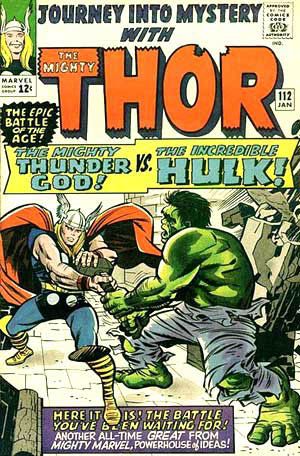
It is true that Zack Snyder’s vision is quite a bit darker than many fans like. However, the notion that these heroes would never fight proves that Glenn Beck has never read a comic book. Heroes punching each other is a tread-worn trope in comics and similar media. It may be the result of a plot or they may have a rivalry. Maybe somebody is mind-controlled - that one is used quite a bit. Whatever. The majority of cross-over covers show the two heroes fighting because that sells copies.* Of course, in this familiar formula, the two heroes ultimately cooperate to defeat the villain after their initial conflict – as they do in the movie – but said initial conflict is practically mandatory. Comic book geeks are notorious for arguing over “Who would win?” in a bout between two noble heroes. It’s our version of fantasy football. The comic book industry has always gratuitously catered to that dynamic. Seriously, how many times has Thor fought the Hulk to see who's stronger? The point is that superheroes hit things – frequently each other. If you don’t know that, you don’t know comics.

The idea that Supes and the Bat would never fight is particularly ridiculous since the contrast between their styles has been explored for decades. They have gotten along fitfully, at best. My first exposure to this friction was Frank Miller’s Batman: The Dark Knight Returns (1986), in which Batman donned powered armor – as he does in the movie – so that he can stand toe-to-toe with the Man of Steel. Incidentally, it's also a bit late to lament darkness in comics. Check the freshness date, above. That ship has sailed, come back, and left again.

And, given Glenn Beck's penchant for apocalyptic pessimism, I am quite surprised to see him decry dark depictions. Ironically, Frank Miller’s fascist version of Batman would probably appeal to Glenn Beck. The two authors also share identical ideas of Islam. Perhaps they should collaborate on something. I would read the shit out of whatever they created together. The unintentional entertainment value of that spectacular train wreck would be truly epic.

I am fascinated by this chronic problem of conservatives hopelessly garbling everything they claim to love. As I’ve written about twice before, their fandom mirrors their patriotism. Conservatives loathe most of the things America is supposed to stand for. Liberty, equality, and democracy are the big three, but the ripples affect a range of related issues from their hostility to the separation of church and state to their contempt for protecting the rights of the accused. They like the righteous feeling associated with noble ideals. Actually championing them is another matter. Conservatives don't oppose dumb slugfests: They just don't like them being dark because it saps the sanctimoniousness out of it.

After all, enjoying pious violence is the whole point.

Stan Lee frequently called Marvel readers "true believers." He meant it facetiously, But those who similarly describe themselves this way earnestly, without irony often do not have the foggiest idea what they are talking about. But that does not stop them from opining how "the people in Hollywood do not understand America at all." - An odd call from the guy who gets his history from David Barton.


______________

* Likewise, the shock-value of showing Superman behaving ignobly has been exploited from days of yore. There is actually a website entitled “Superdickery” facetiously arguing the theory that Superman is a dick by showing old covers of him tormenting Lois Lane and Jimmy Olsen. Of course, there was always a logical explanation inside: It was an object lesson in not judging a book by its cover. The point is that trading on such shock is old school.

Wednesday, March 30, 2016

Unoriginal Sin: Part III

Yeah, I thought it was going to be a two-parter too. Part I starts here if you are just seeing this.

In my previous post, I wrote that it was Robert Bork rather than Antonin Scalia who had “put Originalism on the map.” To clarify, I did not mean to imply that Bork had originated Originalism either – only that he put it in the public eye and made it a political football in modern times.(1) After all, I had acknowledged that the founders had both anticipated and warned against the temptation Originalism and it did not take until modern times for anyone to take the bait.

Take Justice Robert Taney’s infamous Dred Scott decision in which he said that African Americans were “so far inferior that they had no rights which the white man was bound to respect,” and thus, “the negro might justly and lawfully be reduced to slavery for his benefit.” To Taney, blacks were never considered citizens by the founders and therefore could not sue in court. That was the basis of his decision - that we were bound by the prejudices he projected on the founders.

Abraham Lincoln disagreed. Echoing one dissenting opinion, he pointed out that free blacks could vote in many states when the Constitution was ratified. He argued that blacks’ participation in the Constitution’s ratification meant that they were also entitled to its protection. As Lincoln said, "It is grossly incorrect to say or assume, that the public estimate of the negro is more favorable now than it was at the origin of the government." On the contrary, Lincoln believed that the status of blacks had drastically deteriorated.(2)

To Lincoln's ratification argument I could add any number of anti-slavery quotes from our founders – including ones that affirm the humanity of blacks in no uncertain terms. Benjamin Franklin reasoned that freeing slaves was not enough: White society had a duty to help freedmen get acclimated and established as well – including, “To instruct, to advise, to qualify those, who have been restored to freedom, for the exercise and enjoyment of civil liberty.” In other words, for the practice of citizenship.

While there certainly was plenty of racist legislation as well, it varied by place and there was frequent change.(3) The point being is that there was never any national consensus. The issue was always in dispute. Justice Taney had made an Originalist argument. And, like most Originalists, he had grounded it on faulty, cherry-picked history - on what he imagined was original intent:
In the opinion of the court, the legislation and histories of the times, and the language used in the Declaration of Independence, show that neither the class of persons who had been imported as slaves nor their descendants, whether they had become free or not, were then acknowledged as a part of the people, nor intended to be included in the general words used in that memorable instrument. It is difficult at this day to realize the state of public opinion in relation to that unfortunate race which prevailed in the civilized and enlightened portions of the world at the time of the Declaration of Independence and when the Constitution of the United States was framed and adopted. But the public history of every European nation displays it in a manner too plain to be mistaken.
Note the phrase “unfortunate race.” The bogus sympathy is significant. It sounds oddly modern. It reeks of the Bell Curve’s “We’re not racists, but we have to follow our data.” But in both cases, the data was junk. Pat Buchanan was far more blunt in his defense of apartheid South Africa. In his syndicated column, he mocked the concept that there was anything wrong with white supremacy. "Where did we get that idea? The Founding Fathers did not believe this.” By contrast, Justice Taney almost seems to claim he is more evolved - or at least that his times were: "It is difficult at this day to realize."

Some take Taney's tone at face value because he had freed his slaves when he was younger, but his heart had hardened since. Ultimately, his tone was a result of gentility, not sympathy. Of course, this made his argument all the more dishonest because his calcifying attitudes mirrored much of the country's.

But putting Taney's comparatively soft tone and enlightened affectation aside, he was clearly making an Originalist argument: The founders have spoken so our hands are tied. As Sol Wachtler wrote in the Touro Law Review, Taney sounds like he is addressing the Federalist Society. Indeed, Taney does:
It is not the province of the court to decide upon the justice or injustice, the policy or impolicy, of these laws. The decision of that question belonged to the political or lawmaking power, to those who formed the sovereignty and framed the Constitution. The duty of the court is to interpret the instrument they have framed with the best lights we can obtain on the subject, and to administer it as we find it, according to its true intent and meaning when it was adopted.
Towards the end of his decision, Taney hit all the previous beats - the phony sympathy, suggesting public attitudes had evolved, and claiming the court had no legal remedy - all in one run-on sentence:
No one, we presume, supposes that any change in public opinion or feeling, in relation to this unfortunate race, in the civilized nations of Europe or in this country, should induce the court to give to the words of the Constitution a more liberal construction in their favor than they were intended to bear when the instrument was framed and adopted. 
Thus we must assume the worst of the founders and rule accordingly. "Any other rule of construction would abrogate the judicial character of this court, and make it the mere reflex of the popular opinion or passion of the day." Seriously, Rodger Taney wrote just like Robert Bork.

Of course, Bork thought Taney's decision violated Origialism because - drum roll, please - the Constitution does not explicitly grant any right to own slaves. This argument was so absurd and dishonest that even other Originalists had balked at it. Yes, the Constitution certainly skirted the word slavery, but it recognized that institution in a range of ways from the three fifths compromise to the fugitive slave clause. The South insisted on special protections for slavery and refused to ratify the Constitution without them. Preserving slavery was their precondition for participating in every national endeavor from the Declaration of Independence on forward. And, after the Civil War, white supremacy took its place.

Moreover, in the same book that Bork made this argument, he wrote that original intent can be divined from "secondary materials, such as debates at the conventions, public discussions, newspaper articles dictionaries in use at the time, and the like." Those very documents would confirm that the founding fathers were talking about slavery. Of course, as I wrote before, Bork often ignored these materials. Most Originalists do: It's judicial fundamentalism. Bork's dishonesty mirrored Taney's in every way.

I wrote a lot about Robert Bork in my book because his Originalism encapsulates conservative thought rather aptly. Conservatives are authoritarian "traditionalists" who are militantly ignorant of history. When they insist we must submit to the dead hand of the past, they mean we must submit to whatever their elastic, reactionary imaginations can manufacture. As I wrote in the first chapter:
The Tea Party is simply Originalism applied to economics. Hence the tricorn hats they sport at protests. Indeed, Originalism is their entire motif. And Robert Bork’s martyrdom at the hands of the “liberal elite” fits the Tea Party’s victim script perfectly. It is symmetry in symbolism.
It's all there: the weaselly tyranny of "small government" advocates, the persecution fantasy of the privileged, the fear of liberalizing attitudes - real or imagined, you name it. As George Orwell had warned in his famous dystopian novel 1984, “He who controls the past, controls the future.” That's their game plan. For conservatives, history is a creature of convenience. The accuracy of their past is not as important as your loyalty and obedience. It's mythology management. 

Thomas Jefferson thought each generation must get free of the dead hand of the past. Thus, original intent says, "Forget original intent." One good reason for that is the dead hand of the past is frequently the invisible hand of self-interest. And that has not done America much good.


_________

(1) I was quite surprised to see that few articles on Antonin Scalia’s passing bothered to mention Robert Bork. Apparently, today’s corporate press employs lazy mother fuckers who have the collective memory of a fruit fly because actual journalists cost too much. Memo to the media: The method of interns using Google is insufficient. You still need knowledgeable people who know what keywords to enter.

(2) The idea of deterioration was a theme. As Lincoln ruefully wrote a friend: "Our progress in degeneracy appears to me to be pretty rapid. As a nation, we began by declaring that 'all men are created equal.' We now practically read it 'all men are created equal, except negroes.' When the Know-Nothings get control, it will read 'all men are created equal, except negroes, and foreigners and Catholics.' When it comes to this I should prefer emigrating to some country where they make no pretense of loving liberty - to [Tsarist] Russia, for instance, where despotism can be taken pure, and without the base alloy of hypocrisy."

- Abraham Lincoln, Collected Works of Abraham Lincoln, ed. Roy P. Basler (New Brunswick, NJ: Rutgers University Press, 1953), 2:323.

(3) Shortly after the American Revolution, slave codes – which also policed the behavior of free blacks – were loosened. Tobacco’s profitability was dropping and the practice of slavery was conspicuously inconsistent with the ideals of the revolution. Many people believed that slavery was dying off. Northern states abolished slavery outright during this period, while many in the South took advantage of the loosened laws to voluntarily free their own slaves. Then, Eli Whitney invented the cotton gin, restoring slavery’s obscene profitability. Slavery’s apologists went from calling it a necessary evil to calling it a positive good authored by God. (The Enlightenment was over and America was becoming less secular as well.) Money talked and legislatures listened. Not only were slave codes re-tightened, abolitionist talk was outlawed throughout the South. Criticizing slavery in any way - as Thomas Jefferson had - could get you arrested. Racism and authoritarianism accordingly worsened.

Thursday, March 10, 2016

Unoriginal Sin: Part II

Let's acknowledge the elephant in the funeral parlor.

Obviously, this two-parter (now three) on Originalism was prompted by the recent death of Supreme Court Justice Antonin Scalia. There was no advocate of Originalism on the court more conspicuous or malicious than Scalia. Thus, his name became synonymous with this spectacularly dishonest doctrine.

But Justice Scalia did not originate Originalism. Indeed, he did not even put the idea on the map. That dubious distinction goes to Robert Bork, who Ronald Reagan had sought (and fortunately, failed) to put on the court. Un-fortunately, Bork became a martyr in conservative lore, which helped pave the way for other conservative appointments - like Antonin Scalia.

I talked a lot about Robert Bork in my book because his hostility to liberty and equality were legendary. This was valuable to me because my thesis was that conservatives dislike the three interdependent Enlightenment ideals of liberty, equality, and democracy that America was founded on. Bork argued that liberty and equality had both gotten out of control – while contradictorily arguing that they were locked in a zero-sum game. He never really reconciled this.(1)

Moreover, Robert Bork was what I called “a treasure trove of profoundly unpatriotic thought.” He believed that “current liberalism’s rot and decadence is merely what liberalism has been moving towards for better than two centuries.”(2) In other words, since our nation’s founding. And what is liberalism? Bork wrote, “Liberalism does not vary; it is always the twin thrusts of liberty and equality, and they never change.” Of course, for someone writing a book entitled Conservatism is Un-American, Bork's works comprise a horde of rhetorical gold that cannot be ignored. Talk about The Tempting of America.

And I am not twisting Bork’s words: He explicitly cites the American Revolution and the Enlightenment. “The idea of equality began to undergo considerable and worrisome change soon after its enshrinement in the Declaration.”(3) Yes, people started applying it – a logical result, especially since we had complained so bitterly of English tyranny.(4) And here is Bork on individual liberty:
Jefferson was a man of the Enlightenment and the Declaration of Independence is an Enlightenment document. That means not only faith in the power of reason to build a just and stable social order, but also emphasis on the individual as the building block of society. The Enlightenment optimists made a serious mistake about the nature of the individual human in whom they placed so much faith.(5)
And what I have quoted thus far is just the tip of the iceberg.

At this point, you are probably wondering how accurately such a hostile critic of the Enlightenment would interpret the Constitution. The answer is pretty awkwardly.

Let's zero-in on liberty for a bit. Thomas Jefferson said, “Rightful liberty is unobstructed action, according to our will, within limits drawn around us by the equal rights of others.”(6) Or as one-time conservative icon Barry Goldwater put it, "I am a conservative Republican, but I believe in democracy and the separation of church and state. The conservative movement is founded on the simple tenet that people have the right to live life as they please as long as they don’t hurt anyone else in the process."(7) The logical corollary of this is that our rights are infinite in number, but not breadth.  

Interestingly, this bedrock principle made some of our founders suspicious of the Bill of Rights because they worried that such a list would be used to limit our rights. For example, on October 28, 1787, Justice James Iredell argued at the North Carolina ratification convention, "[I]t would not only be useless, but dangerous, to enumerate a number of rights which are not intended to be given up; because it would be implying, in the strongest manner, that every right not included in the exception might be impaired by government without usurpation; and it would be impossible to enumerate every one. Let anyone make what collection or enumeration of rights he pleases, I will immediately mention twenty or thirty more rights not contained in it."(8) In 1789, Representative Theodore Sedgwick echoed Iredell's objection on the floor of Congress. He quipped, "[T]hey might have gone into very lengthy enumeration of rights; they might have declared that a man should have a right to wear his hat if he pleased; that he might get up when he pleased, and go to bed when he thought proper."(9)

James Madison acknowledged that this was a problem and came up with a solution: The Ninth Amendment. That's the one that says the Bill of Rights does not limit your rights to a list of ten. It states, "The enumeration in the Constitution of certain rights, shall not be construed to deny or disparage others retained by the people." Of course, deny and disparage is exactly what Originalists do when they say that liberals are "inventing new rights." Therefore, Originalists routinely ignore original intent.

Of course, I should say that they studiously ignore original intent because they put some effort into it. Take Robert Bork's take on the Ninth Amendment at his confirmation hearings:
I do not think you can use the Ninth Amendment unless you know something of what it means. For example, if you had an amendment that says “Congress shall make no” and then there is an ink blot and you cannot read the rest of it and that is the only copy you have, I do not think the court can make up what might be under the ink blot if you cannot read it.(10)
The obvious problem with Bork's sorry ink blot analogy, is that we have a wealth of source material to tell us what the Ninth means. We have debate transcripts, pamphlets, letters, etc. But that's not the kicker. The kicker is that many founders had anticipated how Originalists could misconstrue the Constitution. Here is Justice James Iredell again:
No man, let his ingenuity be what it will, could enumerate all the individual rights not relinquished by this Constitution. Suppose, therefore, an enumeration of a great many, but an omission of some, and that, long after all traces of our present disputes were at end, any of the omitted rights should be invaded, and the invasion be complained of; what would be the plausible answer of the government to such a complaint? Would they not naturally say, “We live at a great distance from the time when this Constitution was established. We can judge of it much better by the ideas of it entertained at the time, than by any ideas of our own. The bill of rights, passed at that time, showed that the people did not think every power retained which was not given, else this bill of rights was not only useless, but absurd. But we are not at liberty to charge an absurdity upon our ancestors, who have given such strong proofs of their good sense, as well as their attachment to liberty. So long as the rights enumerated in the bill of rights remain unviolated, you have no reason to complain.”(11)
Both stories suppose missing documents. The difference is Iredell was speculating about the future while Bork was misrepresenting the present. Otherwise, they track exactly. It is almost as if Bork had read Iredell and thought, "What a neat idea!"

Also note the second to last line in the block quote: "But we are not at liberty to charge an absurdity upon our ancestors, who have given such strong proofs of their good sense, as well as their attachment to liberty." Although he did not quite anticipate the founders being thought of as marble gods or prophets, James Iredell still recognized that veneration had its perceptual pitfalls.

Conservatives are so enamored with the dead hand of the past that they sometimes take it literally. When Justice Scalia died, Heritage Foundation senior fellow Hans von Spakovsky said that pending cases should be decided as if Scalia were still alive. Have sitting Justices died before in our 200+ year history? Of course. Could they vote from the grave? Of course not. But traditionalists don't really care about precedent.

If that absurdity is not enough, there is also a generous dollop of hypocrisy. As Right Wing Watch noted, "We can’t help but point out the irony that von Spakovsky has been one of the primary drivers of the myth that massive voter fraud requires suppressive laws that make it harder to vote. One of the voter-fraud specters he has raised is that of people casting votes on behalf of people who have died."

But I noticed another amusing nugget of absurdity - namely that it violates original intent. Off the top of my head I could think of several instances in which Thomas Jefferson explicitly said the dead have no rights or political voice and that was as it should be. He believed each new generation should be free of the previous one's debts and obligations. To be anchored by the past was tyranny. He wrote floridly and often on this topic, but always with a secular, scientific mindset. To Major John Cartwright, Jefferson wrote:
Rights and powers can only belong to persons, not to things, not to mere matter, unendowed with will.  The dead are not even things.  The particles of matter which composed their bodies, make part now of the bodies of other animals, vegetables, or minerals of a thousand forms.  To what then are attached the rights and powers they held while in the form of men?  A generation may bind itself as long as its majority continues in life;  when that has disappeared,  another majority is in place,  holds all the rights and powers their predecessors once held,  and may change their laws and institutions to suit themselves.(12)
Even the cautious and conservative John Adams believed, "[T]he people alone have an incontestable, unalienable, and indefeasible right to institute government; and to reform, alter, or totally change the same, when their protection, safety, prosperity and happiness require it."(13)

Of course, some conservatives will protest that they never denied we had the right to change things - only the wisdom in doing so. But other conservatives feel otherwise. As I wrote in my book, Originalism functions like religious fundamentalism. "Both insist on a 'strict literal interpretation' of sacred texts while twisting them into pretzels." And neither are really freedom-friendly. As Corey Robin pointed out, Antonin Scalia was a devoutly religious authoritarian. Indeed, Scalia believed that the devil literally exists and is promoting atheism. Moreover, Thomas Jefferson was not just making a legal argument but an attitudinal one. He thought culture evolved and that government must evolve with it:
Some men look at constitutions with sanctimonious reverence and deem them like the Ark of the Covenant, too sacred to be touched.  They ascribe to the men of the preceding age a wisdom more than human, and suppose what they did to be beyond amendment.  I knew that age well; I belonged to it, and labored with it.  It deserved well of its country.  It was very like the present, but without the experience of the present; and forty years of experience in government is worth a century of book-reading; and this they would say themselves, were they to rise from the dead.  I am certainly not an advocate for frequent and untried changes in laws and constitutions. I think moderate imperfections had better be borne with; because when once known, we accommodate ourselves to them, and find practical means of correcting their ill effects. But I know also that laws and institutions must go hand in hand with the progress of the human mind.  As that becomes more developed,  more enlightened,  as new discoveries are made,  new truths disclosed,  and manners and opinions change with the change of circumstances,  institutions must advance also,  and keep pace with the times.  We might as well require a man to wear still the coat which fitted him when a boy, as a civilized society to remain ever under the regimen of their barbarous ancestors.(14)
The barbarians in today's Tea Party movement disagree. And given Donald Trump's thuggish campaign, you can hardly object to my using the B-word.

Historians rightly warn against making the mistake of presentism - of seeing the past through the lens of the present. But I am often struck by how modern-sounding some historical figures were. We will always have curious, conscientious tinkerers. And we will always have ignorant bigots - although, hopefully fewer with better education. The struggle between bullies and nerds is eternal. Who is currently winning varies over time: There are both progressive periods and nasty backlashes. This is not to deny that we have made net gains. The point is the struggle continues. Yes, the more things change, the more they stay the same. But the reverse is also true: The past was a time of constant conflict. And the founders fought a revolution no less, so they were not as averse to change as conservatives claim.

As Robert Bork acknowledged, Thomas Jefferson "was a man of the Enlightenment." But Bork thought those "Enlightenment optimists" were wrong about human nature and therefore should be ignored. Conservatives insist on judging the present by the values and attitudes of the past - except, of course, when that past is the Enlightenment and therefore inconvenient.

End of Part II -  Part III is here.


_______________

(1)  My best guess says that Bork believed they were initially small and distant from each other and that they have only recently closed the empty ground in between. Indeed, on page 67 of Slouching Toward Gomorrah, he wrote, “[I]t was not until the twentieth century that equality became a serious threat to freedom.” There are a couple of problems with this. First, he believed that they “operate in different areas of life” with liberty reveling the realm of pleasure and equality threatening the realm of achievement. Wouldn’t this limit how much they could encroach on one another? Sure, there might be some topics where they overlap and conflict could occur, but not much. Second, he sees these oppositional forces as cooperating against traditional morality. Here he is quite right: liberty and equality do cooperate – and often (although not always) against morality. But this cooperative dynamic is awkward for his oppositional dynamic. Perhaps Bork saw liberty, equality, and morality in a three-way fight; but that is not quite the same as liberty and equality cooperating. That just means that the three forces are pushing against each other with one possibly taking the brunt depending on the issue. Maybe he thinks liberty and equality are “frenemies” who temporarily ally against tradition. But that would not explain their cooperating when traditional morality is not an issue. I have run across countless quotes from our founders that use the terms liberty and equality interchangeably and they do not concern sex, family, or religion. And we are not talking about sloppy word association – liberty and equality are built into each other’s definitions, hence their interdependence. Remember Jefferson's definition of "rightful liberty." That is also why Cato wrote, “Liberty can never subsist without equality.” Without it, might makes right and only the tyrant is free. Can liberty and equality conflict? Of course! But liberty can conflict with liberty. For example, one person’s right to know can clash with another’s right to privacy. (If you are affected, you have a right to know: Otherwise, it is nobody’s business.) Our rights bump up against each other’s all the time and it is the law’s role to referee, but that does not mean we should limit rights in order to preserve them. Yes, liberty and equality have grown during our history. The result is less hypocrisy with regard to the principle Jefferson articulated. It is fulfilling an often broken promise.

(2)  Robert H. Bork, Slouching Towards Gomorrah (New York: Reagan Books, 1997), 63.

(3)  Ibid., 67. Bork knew that he was courting controversy. On the previous page, he wrote, “The proposition that all men are created equal said what the colonists already believed, and so, as Gordon Wood put it, equality became ‘the single most powerful and radical ideological force in all American history.’ That is true and, though it verges on heresy to say so, it is also profoundly unfortunate.”

(4)  Some conservatives will invoke Edmund Burke and insist that the colonists only wanted the traditional “Rights of Englishmen” that they had been denied. But the interpretation of these rights had always been in flux on both sides of the pond. Certainly they were in dispute during the English Civil War in the 1640s. Another example would be the issue of slavery. During the Enlightenment, more Englishmen and colonists began to see it as inconsistent with British political principles. In his first draft of the Declaration of Independence, Thomas Jefferson accused King George III of forcing it on America. A bit of an exaggeration, of course. However, Royal authorities did make it difficult to free your own slaves and these regulations were later relaxed after independence was won. The point is these rights were always evolving. The American Revolution sped up this evolution, but change was already a constant long before.

(5)  Robert H. Bork, Slouching Towards Gomorrah (New York: Reagan Books, 1997), 58.

(6) Thomas Jefferson, The Political Writings of Thomas Jefferson: Representative Selections, ed. Edward Dumbauld, (New York: Liberal Arts Press, 1955), 55. The quote comes from a letter to Isaac Tiffany on April 4th, 1819. The Manuscript Division of the Library of Congress has a scan of it here.

(7) Barry Goldwater, “Job Protection For Gays,” Washington Post, July 13, 1994.

(8) Debates in the Several State Conventions on the Adoption of the Federal Constitution as Recommended by the General Convention at Philadelphia in 1787: Together with the Journal of the Federal Convention, Luther Martin's letter, Yates’s minutes, Congressional opinions, Virginia and Kentucky resolutions of '98-'99, and other illustrations of the Constitution, ed. Jonathan Elliot (Philadelphia: Lippincott, 1937), 4:167.

(9)  Annals of Congress, ed. Joseph Gales & William Seaton, (Washington: Gales and Seaton, 1834), Column 532 Vol. 1.

(10)  Nomination of Robert H. Bork to be Associate Justice of the Supreme Court of the United States: Hearing Before the Senate Comm. on the Judiciary 117 (Washington, D.C.: Government Printing Office, 1989), 249.

(11) Debates in the Several State Conventions on the Adoption of the Federal Constitution as Recommended by the General Convention at Philadelphia in 1787: Together with the Journal of the Federal Convention, Luther Martin's letter, Yates’s minutes, Congressional opinions, Virginia and Kentucky resolutions of '98-'99, and other illustrations of the Constitution, ed. Jonathan Elliot (Philadelphia: Lippincott, 1937), 4:149.

(12)  Thomas Jefferson, The Life and Writings of Thomas Jefferson: Including All of His Important Utterances on Public Questions, Compiled from State Papers and from His Private Correspondence, ed. Samuel Eagle Forman, (Indianapolis: Bobbbs-Merrill Co., 1900), 294.

(13)  John Adams, Article VII, Constitution of the Commonwealth of Massachusetts, 1780.

(14) Thomas Jefferson, Works of Thomas Jefferson, ed. Paul Leicester Ford (New York: Kickerbocker Press, 1904), 12:12.

Monday, February 29, 2016

Unoriginal Sin: Part I

Conservative ideology is often convoluted and dishonest. Its "simple truths" must be buttressed by increasingly Byzantine rationalizations that make hypocrisy a constant rhetorical hazard. If their magazines were factories, their DAYS WITHOUT AN ACCIDENT signs would seldom escape single digits.(1) I blame negligent and callous management. Conservative scribes need a good union.

Take the judicial doctrine of Originalism. At first, it seems quite reasonable and straightforward: It insists that the Constitution should be interpreted as the founding fathers intended. So, what's wrong with that?

Well, one big problem with this doctrine is that Originalists harbor some pretty faulty assumptions about our founders. Their fanciful founders were devout Christians who were skeptical of government. In this reactionary fantasy, the founders all hated taxes, handouts, and social engineering of any sort. Not quite.

The idea that the founders wanted to run the country on a biblical basis is particularly ridiculous. Patrick Henry was the only famous founder who thought religion had any place in government – the only one they can quote without lying outright. The rest were either deists who openly loathed organized religion or Christians who understood that mixing church and state was dangerous to both.

Otherwise, there were few areas of broad agreement. The founders fought over everything from slavery to the property qualification for voting to the proper role of government. Remember reading about the Federalists and the Anti-Federalists? This may surprise you, but they disagreed over the how much power the federal government should have. Yes, it’s shocking, I know.

And even after compromises were hammered out, there was still disagreement on how to interpret the results. Certainly everyone remembered what they were originally aiming for and sought to turn every ambiguity to their advantage. And often ambiguity is what makes compromise possible. Your “obvious” interpretation will likely differ from mine. But if we both think the language is to our advantage, we will both approve. We will either think we have outfoxed each other or that we have found common ground – only to decry betrayal later on. In politics, compromises are only temporary cease fires.

And these fights could get downright dirty. Thomas Jefferson and John Adams hired newspapers to slander each other. This is the origin of our two party system, folks. It shattered their friendship and they did not mend it until years after most of the other founders had died off. (They died within hours of one another on the fiftieth anniversary of the Declaration of Independence that they had worked together on.) The point is that disagreement was fierce, to say the least. As I wrote in my book, "To suggest that there was consensus where there was scalding conflict is either ignorant or dishonest."

One often overlooked topic of conflict was their concepts on economic equality. As I detail both in my book and this blog, founders like Thomas Jefferson, Benjamin Franklin, Thomas Paine, and many others were proto-socialists who thought a rough economic equality was fundamental to a functioning republic. James Madison thought it would mitigate the evils of political parties, while Noah Webster thought it was "the very soul of a republic." Obviously, not all the founders agreed. Alexander Hamilton and John Jay thought the rich should rule and had no problem saying so. This was why Jefferson called Hamilton a corrupt monarchist. The founders did not speak with one voice.

Finally, party strategy and ideology have often gotten flipped and remixed since then. The founders who favored states rights, like Thomas Jefferson, advocated for the poor – whereas the founders who wanted a strong central government, like Alexander Hamilton, favored the rich. At that time, the greatest threat to the wealthy came from the states. In some states, poor veterans demanded debt relief acts and their agitation sent terrified bankers to the feds for help. After all, that’s what the right thought the Constitution was for. As James Madison had argued in Federalist #10, “a rage for paper money, for the abolition of debts, for an equal division of property, or for any other improper or wicked project” would be less likely to prevail at the national level. (Yes, vets were demanding those other things too.) Conservatives originally loved the federal government.

Such flips should not be difficult to imagine. After all, the Republican and Democratic parties had switch geographical voting bases after the 1964 Civil Rights Act. That is when the GOP began its infamous Southern Strategy of using racist dog whistles. Likewise, the GOP was once so pro-tariff that it was their signature issue, but today they favor free trade.(2)

Incidentally, George Washington thought, “The Men who oppose a strong and energetic government are, in my opinion, narrow minded politicians, or are under the influence of local views.”(3) No, he did not seek an eighteenth century version of the New Deal. (Although Thomas Paine’s social security proposal suggests that he might have.) But nor did Washington think that the weak, decentralized, states rights-based Articles of Confederation system worked either. Sorry, modern day “Tea Party” movement.

Likewise, as I wrote in my book, Thomas Jefferson is often called the father of small government. But to him, “big government” meant large armies and broad police powers - things conservatives love. So it is strange to hear them invoke the man who thought banks were “more dangerous that standing armies.”(4)

Today, ideological battle lines are ying-yanged from what they were when the founders lived. This makes making honest analogs pretty tricky to pull off. You have to acknowledge these switches, which conservatives are loathe to do because, to them, tradition is about resisting change rather than adapting to it. Legitimacy hinges on purity of preservation. They see the founders as almost prophets whose precepts are therefore perfect and eternal. By contrast, liberals are more likely to recognize that the founders were fallible mortals with all the associated foibles.

I am not saying that you cannot invoke the founders to argue anything – obviously, I do routinely. But you have to provide context to be honest, and context gets complex. After all, this was supposed to be a short post. And I have not even gotten into the enormous problems with the arguments of Robert Bork and Antonin Scalia or how some founders had anticipated the great temptation of Originalism and warned against eating the fruit of the Tree of Stupid.

I will explore those omissions in part two. The point here is that conservatism's "simple truths" are neither. Originalism is the Creationism of jurisprudence. Both are wishful thinking-driven cherry-picking: Myths and fables seeking not only to be taken literally, but to also enjoy the force of law.

And that is not what the founders wanted.

End of Part I - Part II is here.

________________

(1) Okay, this joke admittedly begs explanation. See, factories were places were Americans used to make things before Republicans and conservative/"centrist" Democrats facilitated their export overseas. Some factories still exist. Take your kids to see them before they are all gone.

(2) Such party-wide flips are familiar. They may even make parties disown or at least ignore their own founders. For example, Thomas Jefferson founded the Democratic Party. Ignoring the fact that Jefferson had owned slaves while writing against slavery, Lincoln said the Democrats had originally put “the man before the dollar” – i.e. put human rights before property rights. Since abolitionists frequently quoted Jefferson’s anti-slavery rhetoric, the Democrats had soured on their founder. In a famous letter Lincoln reflected on the irony - particularly since the Republicans were arguably descended from the old Federalist Party. He followed up with an anecdote about two drunks who got to wrestling in the street and wound up wearing each others great coats by the time they got pulled apart. Lincoln said that America's two major parties had done the same. In the early twentieth century, progressive Republican Teddy Roosevelt affirmed the primacy of the man before the dollar. His younger cousin, Franklin D. Roosevelt later ran as a Democrat and quoted Lincoln's anecdote about the two drunks, suggesting that the two parties had switched principles again. Today, the party of Lincoln has embraced Jefferson Davis. And so it goes.

(3) George Washington, The Papers of George Washington: Confederation Series, ed. W.W. Abbot (Charlottesville: University Press of Virginia, 1983), 5:257.

(4) Thomas Jefferson, Writings of Thomas Jefferson, ed. Andrew Adgate Lipscomb and Albert Ellery Bergh (Washington DC: Thomas Jefferson Memorial Association, 1905), 15:23. Actually it was John Taylor who first coined the phrase but Jefferson expressed his agreement in a letter to him on June 7th 1816. Jefferson’s reply reads, “And I sincerely believe, with you, that banking establishments are more dangerous than standing armies; and that the principle of spending money to be paid by posterity, under the name of funding, is but swindling futurity on a large scale.”